



Search
Related News
- 00
0000-00
EU Updates CEMS Export Rules for Secure GHG Data - 00
0000-00
Wanhua and SUEZ Set Up UAE SWRO Assembly Base - 00
0000-00
Saudi pre-screening adds LCA and ERD reports - 00
0000-00
How to Evaluate an Industrial Water Reclamation Supplier for Long-Term OPEX Control - 00
0000-00
Brine Crystallization Treatment vs Evaporation Ponds: Which Fits High-Salinity Wastewater?
Wanhua and SUEZ Set Up UAE SWRO Assembly Base




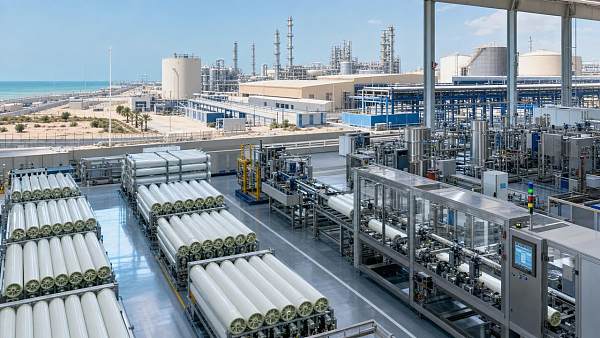
On June 11, 2026, during WATER 2026 in Shanghai, Wanhua Chemical announced a strategic agreement with SUEZ to build a localized SWRO membrane element assembly and testing center in the Jebel Ali Free Zone in the UAE. The first production lines are scheduled to begin operation in Q3 2026. For companies involved in desalination equipment supply, project procurement, delivery management, and regional service support in the Middle East, this development is worth close attention because it points to a shorter delivery window for China-made SWRO membrane systems and a more localized response model for project-specific technical requirements.
What has been confirmed so far
According to the disclosed information, the cooperation covers a localized assembly and testing center for SWRO reverse osmosis membrane elements in the UAE’s Jebel Ali Free Zone. The announcement was made by Wanhua Chemical on June 11, 2026, during WATER 2026 Shanghai International Water Exhibition, and the agreement was signed with SUEZ.
The first batch of production lines is planned to enter operation in Q3 2026. The stated business effect is a reduction in delivery time for China-made SWRO membrane systems serving the Middle East market from the current 8–12 months to within 5 months. The project also includes support for project-based customization of anti-boron and anti-fouling coating configurations.
Why the supply chain may pay attention
Project procurement teams may see a different delivery rhythm
From an industry perspective, procurement-side attention is likely to focus first on lead time. A shift from 8–12 months to within 5 months, if realized in actual project execution, could affect bid planning, order timing, and inventory assumptions for Middle East desalination-related projects. What deserves closer attention is whether buyers begin adjusting procurement cycles and technical communication earlier around localized assembly options.
System integrators and equipment suppliers may need to reassess response models
For companies supplying membrane systems or participating in overall water treatment project delivery, the significance is not only shorter shipping-related timelines but also the addition of local assembly and testing capability. Analysis shows this may influence how suppliers arrange final configuration, commissioning preparation, and coordination with regional customers. The customizable anti-boron and anti-fouling coating option is also relevant where project specifications differ by application scenario.
Regional service and logistics participants may face higher execution expectations
Supply chain service providers, including those involved in cross-border delivery support and local project coordination, may be affected through tighter execution windows and more project-specific fulfillment requirements. Observably, once localized assembly is introduced, market attention may shift from long-distance shipment alone to the combined efficiency of assembly, testing, documentation, and handover processes inside the destination market.
What companies should track next
Watch for follow-up disclosures after Q3 2026
Companies connected to SWRO projects should monitor how the first production lines are described once they are scheduled to start operating in Q3 2026. The key practical issue is not the signing event itself, but whether subsequent official communication clarifies operating scope, delivery arrangements, and the boundaries of localized testing and assembly.
Check how customization is reflected in project workflows
The confirmed information mentions project-based customization for anti-boron and anti-fouling coating configurations. For procurement, engineering, and client-facing teams, this means technical alignment may need to move earlier in the sales and execution process. It is worth paying attention to how specification confirmation, documentation, and customer communication are handled when customization is involved.
Revisit supplier coordination and lead-time commitments
Businesses that quote on delivery schedules or rely on imported membrane components should review how they communicate expected fulfillment periods to customers in the Middle East. Analysis shows the main issue is not simply whether lead time becomes shorter, but whether contract commitments, planning buffers, and supplier coordination mechanisms are updated accordingly.
Separate announced capability from proven operating performance
What deserves closer attention is the distinction between a strategic agreement and verified project execution results. Companies should avoid treating the announced timetable and delivery compression as automatically universal across all projects before more operating details and execution outcomes become available.
How this reads as an industry signal
Observably, this development can be read as more than a single cooperation announcement, but it should not yet be overstated as a fully proven market shift. The immediate signal is that Chinese high-end membrane equipment suppliers are placing greater emphasis on localized assembly, testing, and faster response in overseas markets, particularly in the Middle East. At the same time, it is more appropriate to understand this as an operational signal with strategic implications rather than a completed industry result, because the first lines are only scheduled to start production in Q3 2026.
Analysis shows the industry will likely focus on whether this model improves actual project responsiveness, especially where delivery timing and technical customization are both critical. Until more execution evidence is available, the announcement functions as a meaningful indicator of direction rather than a conclusive market outcome.
What the announcement means at this stage
At this stage, the most balanced reading is that the Wanhua-SUEZ agreement highlights a concrete move toward localized fulfillment for SWRO membrane systems serving the Middle East. Its practical importance lies in the stated compression of delivery time and the addition of project-based coating customization. For the industry, this is best understood as a near-term operational change with longer-term implications worth tracking, rather than as a finalized proof that market dynamics have already shifted across the board.
Basis of this article
This article is generated based on the user-provided news title, event date, and event summary. The factual portion is limited to the disclosed information provided in the input. For this type of industry update, relevant source categories typically include official company announcements, event disclosures, industry association releases, authoritative media reporting, and technical or standards-related documentation.
No specific official source link was provided in the input, so the exact primary-source link still requires ongoing verification. Follow-up attention should remain on any later official updates concerning Q3 2026 production start, the scope of localized assembly and testing, and how the shortened delivery cycle is reflected in actual project execution.
Recommended News
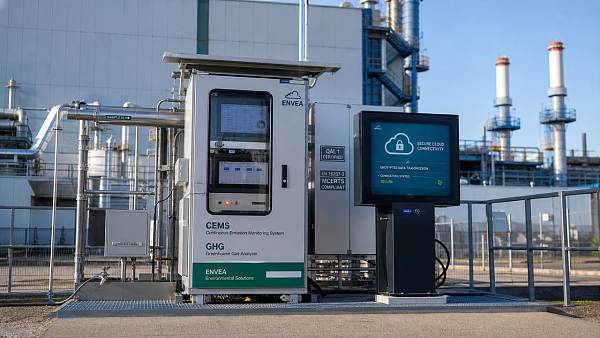
 EU Updates CEMS Export Rules for Secure GHG DataJun 14, 2026EU updates CEMS export rules: from Oct 1, 2026, GHG analyzer modules need SM4 dual encryption, MQTT 5.0, and Annex F certification. See who is affected and how to stay EU market-ready.
 Wanhua and SUEZ Set Up UAE SWRO Assembly BaseJun 14, 2026Wanhua and SUEZ set up UAE SWRO assembly base to cut Middle East delivery times and enable localized membrane testing and customization. See what it means for desalination supply chains.
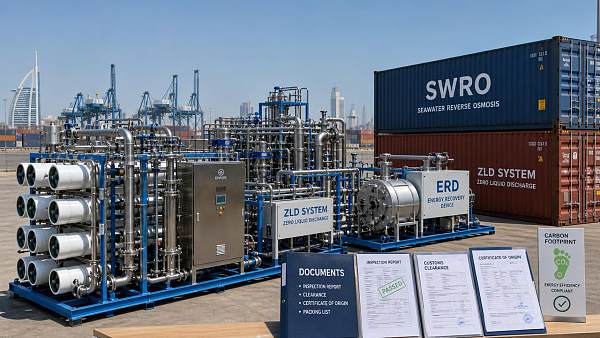
 Saudi pre-screening adds LCA and ERD reportsJun 14, 2026Saudi pre-screening adds LCA and ERD reports for ZLD, SWRO, and ERD imports. Learn how the new Saudi compliance rule may impact customs timing, certification readiness, and export costs.
 How to Evaluate an Industrial Water Reclamation Supplier for Long-Term OPEX ControlJun 14, 2026Industrial water reclamation supplier selection starts with OPEX control. Learn how to compare lifecycle cost, process fit, service, and digital readiness for smarter long-term savings.