



Search
Related News
- 00
0000-00
Thermal Sludge Treatment Options: Drying, Pyrolysis, and Incineration Compared - 00
0000-00
Environmental Engineering for ZLD Projects: Site Data, Permits, and Design Risks - 00
0000-00
Zero Waste Water vs ZLD: Process Choices for Industrial Effluent Reuse - 00
0000-00
Sustainable Waste Management Strategies for Plants With Mixed Waste Streams - 00
0000-00
High Temperature Incineration: Temperature, Residence Time, and Emission Limits
How Sustainable Water Management Cuts ESG Risk




Sustainable Water Management is no longer a compliance add-on but a core lever for reducing ESG risk, protecting asset value, and strengthening long-term business resilience. For business evaluators, understanding how industrial water systems, desalination, ZLD, and emissions-linked resource recovery affect regulatory exposure, operating stability, and investor confidence is now essential to making smarter strategic decisions.
In capital-intensive sectors, water risk now influences permitting, insurance terms, debt pricing, export readiness, and the credibility of sustainability disclosures. A site that depends on freshwater abstraction, discharges difficult effluent, or lacks auditable emissions-linked monitoring can face a chain of ESG issues within 12 to 36 months, especially where water stress, tighter discharge thresholds, and carbon accountability are converging.
For business evaluators, the practical question is not whether Sustainable Water Management matters, but how to assess it in a way that connects engineering reality with enterprise risk. That means looking beyond generic policy statements and examining treatment recovery rates, uptime resilience, sludge handling, desalination dependence, digital monitoring coverage, and the economics of resource recovery.
Why Sustainable Water Management Has Become a Core ESG Risk Variable
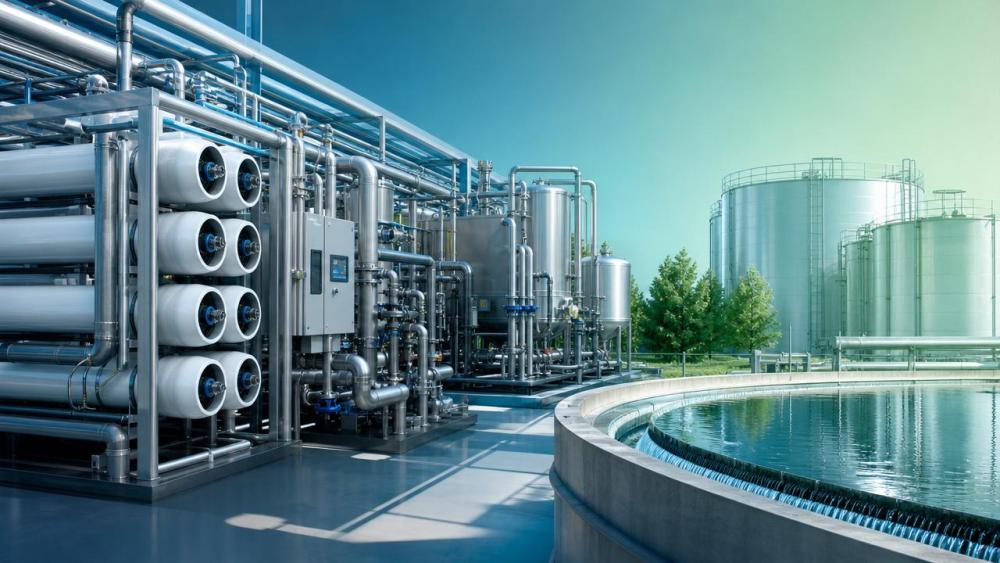
ESG risk in water-intensive operations usually appears in three linked forms: regulatory exposure, operational vulnerability, and capital market scrutiny. If one element weakens, the others often follow. A plant with unstable wastewater compliance may also face production interruption, higher treatment costs, and tougher investor questioning during diligence or refinancing.
This is especially visible in sectors using high-purity process water, handling high-TDS wastewater, or operating in arid regions. In these settings, Sustainable Water Management is tied to business continuity metrics such as 95% to 99% water system availability, 70% to 90% recovery targets, or contingency storage windows of 24 to 72 hours.
Three ESG pressure points evaluators should test
- Water sourcing risk: dependence on stressed basins, seasonal supply cuts, or imported industrial water.
- Discharge risk: tightening local limits for salinity, COD, ammonia, heavy metals, and sludge disposal.
- Data credibility risk: insufficient metering, fragmented reporting, or weak links between water and carbon records.
In practice, evaluators should ask whether a facility can withstand a 10% to 20% cut in water intake, a 15% increase in disposal fees, or a shorter compliance review cycle. If the answer depends on emergency trucking, manual sampling, or temporary outsourcing, the ESG profile is weaker than management presentations may suggest.
How water systems influence enterprise value
Water infrastructure affects valuation through direct and indirect channels. Directly, it shapes OPEX, maintenance budgets, chemical usage, membrane replacement cycles, and energy demand. Indirectly, it affects plant utilization, social license to operate, procurement eligibility, and export compliance where carbon- and pollution-intensive production is under greater scrutiny.
A business with robust Sustainable Water Management often shows stronger resilience in four areas: fewer shutdown days, lower discharge volatility, better disclosure confidence, and clearer long-term capex planning. Those are material indicators for private equity screens, lender technical reviews, and strategic acquisition decisions.
What “good” looks like in evaluation
A credible water strategy usually combines physical assets and management discipline. Typical markers include online monitoring at key nodes, preventive maintenance intervals of 30 to 90 days, redundancy for critical pumps or membranes, and a documented response path for excursions within 2 to 4 hours rather than after a monthly review.
Key Infrastructure That Reduces ESG Exposure
Not all water investments reduce ESG risk equally. For business evaluators, the highest-impact assets are usually those that lower freshwater dependence, control difficult effluent, shrink waste volume, and generate auditable environmental data. This is where industrial water treatment, ZLD, desalination, sludge dewatering, and CEMS-linked monitoring become strategically important rather than merely technical.
Industrial water and ultrapure water systems
In electronics, pharmaceuticals, advanced manufacturing, and specialty chemicals, process stability depends on water quality consistency. Ultrapure water systems can require multi-stage treatment, often combining pretreatment, RO, EDI, UV, and polishing loops. From an ESG perspective, the risk is not only contamination but also the water loss and reject streams generated across the treatment chain.
Evaluators should examine recovery ratios, recycle loops, and reject management. A system with 75% to 85% overall recovery and stable conductivity control may carry a much lower long-term risk than a lower-efficiency setup that appears cheaper at procurement stage but produces more wastewater and more variable downtime.
ZLD and high-salinity wastewater control
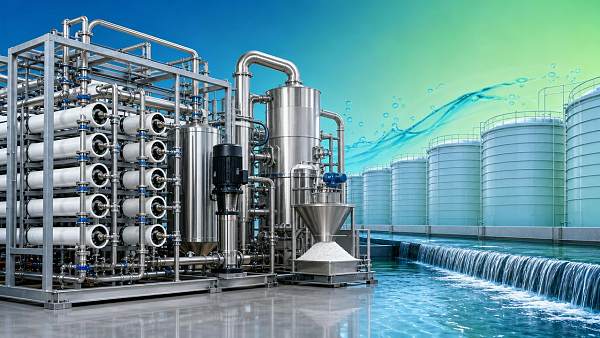
Zero Liquid Discharge is one of the strongest forms of Sustainable Water Management for difficult industrial sites. It usually integrates membrane concentration, evaporation, and crystallization to eliminate liquid discharge and maximize water recovery. While capex is significant, ZLD can materially reduce permitting risk where salinity, toxic residues, or local water sensitivity make conventional discharge increasingly fragile.
A serious review should test feedwater variability, scaling risk, energy intensity, by-product handling, and sludge or salt disposal routes. A ZLD system that performs well on a design sheet but struggles with fluctuating feed chemistry can quickly become a cost center instead of a risk shield.
Desalination as a resilience asset
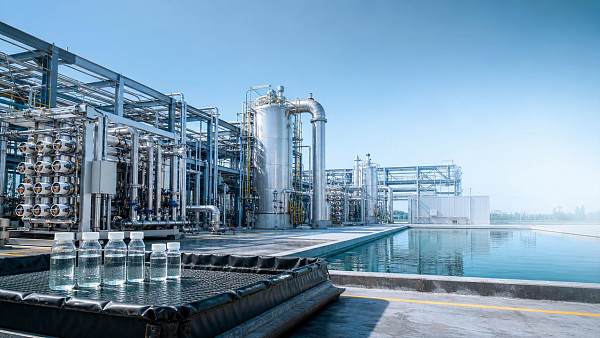
For coastal industry in water-scarce regions, seawater reverse osmosis can convert supply insecurity into a more manageable infrastructure model. Desalination does not eliminate ESG questions, because energy use, brine handling, and intake design remain critical. Yet it can reduce one major vulnerability: dependence on shrinking municipal or groundwater sources.
Evaluators should compare SEC ranges, pretreatment robustness, membrane cleaning cycles, and backup storage. A plant designed for stable operation over 8,000 hours per year with clear brine management planning will generally score better than a system built only around headline output capacity.
The table below helps connect major water-related assets with the ESG risks they address and the due-diligence questions they trigger.
The most important takeaway is that Sustainable Water Management should be judged as a system, not a single unit purchase. The strongest ESG outcomes come when treatment, recovery, waste minimization, and digital verification work together across the same operating boundary.
How Resource Recovery and Monitoring Strengthen ESG Credibility
Water strategy becomes more defensible when it also improves resource productivity. This is why waste-to-energy, sludge reduction, and continuous emissions monitoring have become closely linked to Sustainable Water Management in industrial and municipal infrastructure reviews. Evaluators increasingly look for integrated environmental performance rather than isolated utilities.
Waste-to-energy and water-linked circularity
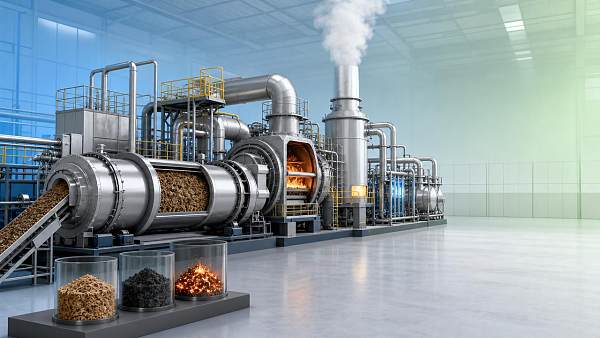
WTE plants can reduce landfill dependence while recovering energy from municipal or hazardous waste streams. Their ESG contribution is strongest when air pollution controls are robust, ash handling is disciplined, and heat recovery improves overall resource efficiency. In some industrial ecosystems, WTE also supports water sustainability indirectly by powering treatment trains or reducing external energy dependence.
For evaluation purposes, review combustion stability, flue gas treatment configuration, residue handling, and dispatch reliability. A facility operating above 850°C with verifiable emissions controls and predictable maintenance windows every 6 to 12 months is generally less exposed than a plant with irregular uptime and poor monitoring transparency.
Sludge dewatering as a hidden ESG lever
Many ESG reviews underestimate sludge. Yet sludge often carries the real cost and disposal liability of wastewater treatment. Better dewatering can cut transport loads, lower storage risk, and reduce downstream incineration or landfill burden. Typical decision factors include final cake dryness, polymer demand, odor management, and whether heat pump drying is justified by volume reduction targets.
Even a 20% to 40% reduction in wet sludge volume can materially affect site logistics and disposal budgets. For business evaluators, that translates into lower cost volatility and fewer environmental incidents related to storage overflow or contractor dependence.
CEMS and carbon-linked water accountability
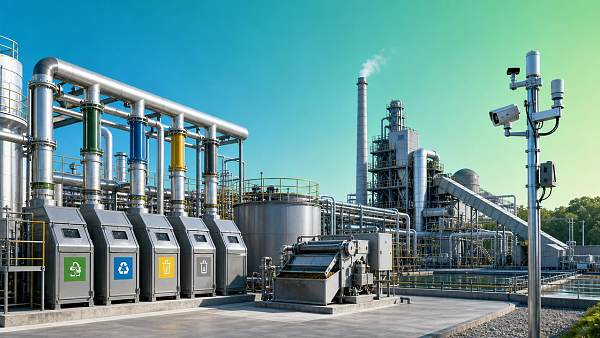
Continuous Emission Monitoring Systems do more than satisfy stack compliance. They strengthen the audit trail between water treatment energy use, thermal processes, and carbon reporting. As buyers, investors, and regulators ask tougher questions about Scope-related impacts and environmental accuracy, second-level monitoring data can materially improve disclosure confidence.
Where desalination, evaporation, or thermal drying consume substantial power, the link between water and carbon becomes impossible to ignore. Evaluators should look for integrated dashboards, calibration intervals, exception logs, and cross-checks between utility consumption, treatment loads, and emissions data.
Minimum data controls to request during diligence
- 12 to 24 months of water balance data by source, use, recycle, and discharge.
- Monthly or quarterly trends for treatment uptime, chemical use, and sludge output.
- Alarm and excursion records with response times and corrective actions.
- Energy and emissions linkage for major water assets such as RO, MVR, or dryers.
- Maintenance logs for critical components including membranes, pumps, and analyzers.
The following table outlines a practical diligence lens that business evaluators can apply when screening projects, acquisitions, or strategic suppliers with water-related ESG exposure.
This framework helps separate cosmetic ESG narratives from operationally grounded Sustainable Water Management. The best-performing assets usually show both engineering discipline and reporting discipline, which is exactly what lenders, strategic buyers, and institutional investors want to see.
How Business Evaluators Can Select the Right Water Strategy
A strong evaluation process should connect site conditions, compliance trajectory, and financial materiality. Rather than choosing the most advanced system by default, decision-makers should compare risk-adjusted fit. In many cases, the right solution is a phased roadmap over 2 to 3 stages rather than a single large capex event.
A practical five-step review model
- Map the water balance: source, consumption, recycle, discharge, and waste outputs.
- Identify the top 3 risk drivers: scarcity, compliance, cost, or disclosure weakness.
- Test the infrastructure gap: treatment capacity, redundancy, monitoring, and disposal routes.
- Run sensitivity scenarios: 10% feed change, 15% energy rise, 20% disposal cost increase.
- Prioritize phased investments by payback logic and ESG risk reduction impact.
Common mistakes in Sustainable Water Management assessment
- Focusing on nameplate capacity but ignoring actual annual uptime.
- Assuming water reuse automatically lowers risk without checking concentrate handling.
- Separating water review from carbon and waste review, which hides system-level costs.
- Relying on one-off lab data instead of 6 to 12 months of operating records.
When to escalate from optimization to major investment
Optimization may be enough when treatment performance is stable and the main issue is controls, maintenance, or recycle tuning. Major investment becomes more likely when a site faces repeated compliance stress, source insecurity, disposal bottlenecks, or strategic growth that existing systems cannot support within the next 18 to 24 months.
For companies operating across desalination, industrial treatment, ZLD, WTE, sludge management, and CEMS-linked reporting, the advantage lies in intelligence integration. That is where a specialist platform such as EWRS adds value: connecting technical performance, policy direction, and capital logic into one decision-ready view.
Sustainable Water Management now sits at the intersection of compliance, cost control, operational continuity, and investor trust. For business evaluators, the most reliable decisions come from testing infrastructure quality, recovery efficiency, monitoring integrity, and the economics of resource recovery as one connected ESG system.
EWRS helps decision-makers interpret complex industrial water, desalination, ZLD, WTE, sludge, and emissions-monitoring landscapes with sharper commercial and technical insight. If you are assessing project risk, supplier capability, or long-term asset resilience, now is the time to get a tailored view. Contact us to discuss your evaluation priorities, request a customized solution framework, or explore more water and resource recovery strategies.
Recommended News
 Thermal Sludge Treatment Options: Drying, Pyrolysis, and Incineration ComparedJun 03, 2026Thermal Sludge Treatment compared: discover how drying, pyrolysis, and incineration impact cost, emissions, energy recovery, and smarter sludge decisions.
 Environmental Engineering for ZLD Projects: Site Data, Permits, and Design RisksJun 03, 2026Environmental Engineering for ZLD projects: learn how site data, permits, brine chemistry, and design risks shape compliant, reliable, cost-effective water recovery.
 Zero Waste Water vs ZLD: Process Choices for Industrial Effluent ReuseJun 03, 2026Zero Waste Water or ZLD? Compare process routes, energy, brine handling, compliance risks, and reuse strategies to choose the right industrial effluent solution.
 Sustainable Waste Management Strategies for Plants With Mixed Waste StreamsJun 03, 2026Sustainable Waste Management strategies for mixed waste plants—cut disposal risk, improve ESG readiness, recover resources, and build a smarter circular operating model.