



Search
Related News
- 00
0000-00
Industrial Water Recovery Technologies Explained: MBR, ZLD, and SWRO Compared - 00
0000-00
Net Zero Solutions for Exporters: How Carbon Tariffs Change Project Priorities - 00
0000-00
SWRO Manufacturer Selection Guide: 7 Questions to Ask Before Requesting a Quote - 00
0000-00
How to Compare Emissions Data Acquisition Systems for CEMS Compliance - 00
0000-00
Waste Heat Recovery in Europe: Which Industries See the Fastest ROI?
When Advanced Filtration Technology Stops Scaling as Expected




When Advanced Filtration Technology no longer scales as expected, technical evaluators face more than a performance gap—they confront rising energy demand, unstable recovery rates, fouling risks, and CAPEX uncertainty. In high-stakes sectors such as ZLD, desalination, and ultrapure water, understanding why scale-up assumptions fail is essential for protecting compliance, uptime, and lifecycle value.
Why does Advanced Filtration Technology lose performance during scale-up?
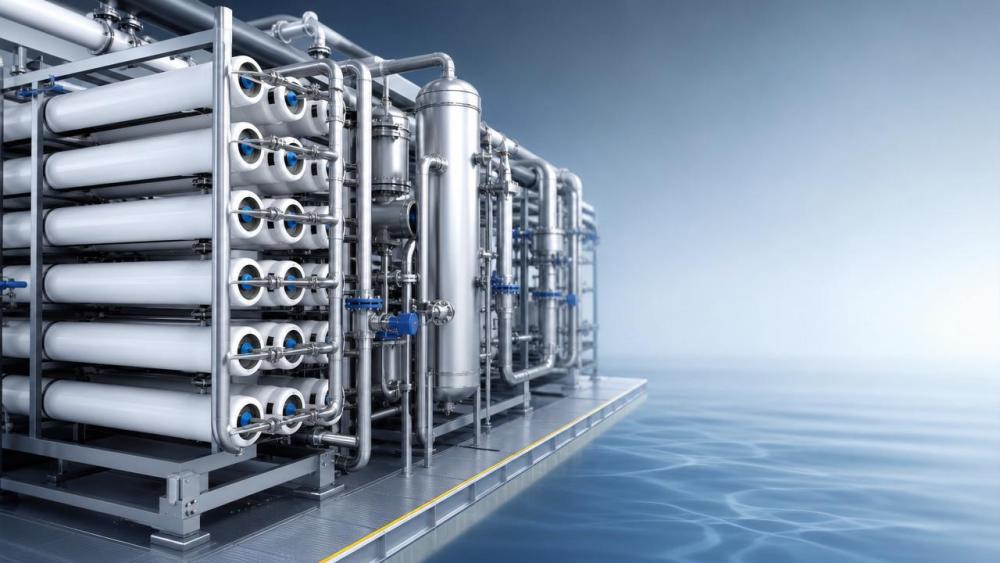
For technical evaluators, Advanced Filtration Technology often looks convincing at pilot scale. Flux is stable, cleaning intervals appear manageable, and recovery targets seem commercially attractive. The problem starts when hydraulic complexity, feed variability, and continuous-duty operation expose constraints that small trials do not fully capture.
In industrial water, SWRO, UPW polishing, and ZLD pretreatment, scale-up failure is rarely caused by one dramatic design flaw. More often, it results from several moderate assumptions breaking at the same time: underestimated fouling load, uneven flow distribution, poor pretreatment resilience, membrane aging, or unrealistic cleaning recovery.
EWRS tracks these scale-up gaps across resource recovery systems because filtration performance does not exist in isolation. A membrane train that loses stability can increase evaporator duty in ZLD, raise sludge output in wastewater lines, compromise boiler feed quality, or weaken ESG reporting credibility when discharge and energy metrics drift beyond planned levels.
- Pilot conditions are often cleaner and more controlled than real plant feed conditions.
- Higher throughput amplifies concentration polarization, pressure losses, and channeling effects.
- Long operating cycles reveal cumulative fouling that short-duration trials fail to show.
- Integration with upstream and downstream assets changes the actual duty placed on the filtration system.
The hidden difference between pilot success and plant reality
A pilot skid may process a conditioned feed with tighter pH control, lower suspended solids excursions, and more operator attention. A full-scale plant handles shutdowns, load swings, seasonal changes, chemical delivery variations, and maintenance delays. Advanced Filtration Technology that performs well in a narrow test window may struggle in that broader operating envelope.
Which technical signals show that scaling assumptions are failing?
Technical evaluators should not wait for major underperformance before challenging a design basis. Several leading indicators can reveal that Advanced Filtration Technology is approaching a scaling limit, even before compliance or production is affected.
The table below helps identify early warning signs that matter in desalination, industrial reuse, UPW pretreatment, and ZLD concentration trains.
These indicators should be normalized against temperature, feed conductivity, and operating load. Without normalization, teams may confuse routine fluctuation with structural design weakness. EWRS emphasizes this distinction because an incorrect diagnosis can trigger unnecessary retrofits or delay a needed redesign.
Why recovery alone is not enough
A system may still hit nominal recovery while already consuming too much power, generating excessive cleaning waste, or overstressing membranes. For Advanced Filtration Technology, stable economics depends on a balanced profile: permeate quality, fouling rate, recoverability after cleaning, specific energy use, and impact on downstream assets.
Where do scale-up risks hit hardest in ZLD, desalination, and UPW systems?
Advanced Filtration Technology behaves differently across applications. Technical evaluators should avoid using one decision framework for all water and resource recovery systems. Feed chemistry, solids profile, temperature, silica content, organics load, and discharge constraints all reshape the risk profile.
ZLD pretreatment and brine concentration
In ZLD, filtration underperformance has cascading consequences. If RO pretreatment misses its target or upstream UF loses stability, the evaporator and crystallizer may inherit a heavier load. That increases steam or electricity consumption, worsens scaling, and can turn a marginal OPEX model into an unsustainable one.
Seawater desalination
In SWRO systems, Advanced Filtration Technology must handle biofouling, colloids, and seasonal intake shifts. A design that works during favorable conditions may become unstable during red tide events, storm-driven turbidity spikes, or changes in intake pretreatment effectiveness. The result is higher cartridge consumption, more frequent CIP, and declining membrane life.
Ultrapure water and high-spec industrial reuse
UPW and high-spec reuse systems are less forgiving than many utility water applications. Even a small rise in TOC, particles, or ionic leakage can affect process yield. When Advanced Filtration Technology scales poorly here, the business impact is not limited to water treatment—it can affect semiconductor, electronics, pharmaceutical, or precision manufacturing operations.
How should technical evaluators compare filtration options before procurement?
Procurement decisions often fail because teams compare nominal flux, membrane area, or initial quotation only. A stronger approach is to compare how each Advanced Filtration Technology option behaves under variable feed, partial load, cleaning stress, and downstream integration requirements.
The following comparison framework is useful when screening suppliers, process packages, or retrofit options.
A robust procurement review asks not just “Can this system run?” but “Can it keep running within the economic and compliance boundaries of the whole facility?” That is especially important where discharge penalties, water scarcity, or ESG-linked reporting make performance drift costly.
A practical evaluation checklist
- Request performance data under variable feed conditions, not just design-point results.
- Ask how fouling rates change at different recoveries and temperatures.
- Confirm what pretreatment quality is truly required to protect the membrane train.
- Evaluate spare parts, membrane replacement cycle, and cleaning chemical logistics.
- Model the cost of off-spec operation, not just ideal steady-state operation.
What cost drivers are usually underestimated?
When Advanced Filtration Technology stops scaling as expected, the first visible issue may be throughput loss. Yet the more damaging effect is often hidden in lifecycle cost. Technical evaluators need to track the indirect penalties linked to energy, cleaning, membrane replacement, labor, and reject handling.
The cost table below highlights areas that frequently move beyond original estimates once a system enters full industrial service.
In many facilities, the downstream cost of unstable filtration is larger than the direct membrane cost. EWRS therefore evaluates Advanced Filtration Technology in system context: if a pretreatment weakness increases evaporator duty, hauling volume, or carbon intensity, the business case changes materially.
How do compliance and ESG pressure change the evaluation standard?
Advanced Filtration Technology is no longer judged only by water quality and nameplate capacity. For many industrial operators, compliance now includes discharge control, energy intensity, emissions reporting, and resilience against future tightening of ESG expectations.
This matters in sectors where filtration interacts with ZLD, waste minimization, carbon accounting, or export-facing manufacturing. A design that appears cheaper upfront may create risk if it requires more energy, larger chemical consumption, or unstable reject quality that burdens later treatment stages.
- Water reuse projects should align design assumptions with local discharge and reuse obligations.
- Desalination and ZLD assets should review how specific energy use affects long-term carbon exposure.
- Industrial exporters may need better operating records and traceable performance data for ESG-related scrutiny.
EWRS supports this broader view by connecting membrane behavior, thermal process implications, and compliance economics. That perspective helps evaluators avoid making filtration decisions that look efficient locally but create risk globally across the facility.
Common misconceptions about Advanced Filtration Technology
“If pilot recovery is high, full-scale recovery should be similar”
Not necessarily. Full-scale hydraulics, feed excursions, and longer run times often reduce the practical recovery ceiling. Design recovery should include operational margin, not just peak trial results.
“More aggressive cleaning solves scaling problems”
Aggressive cleaning can restore short-term flux, but repeated chemical stress may shorten membrane life and increase waste. If root causes remain unchanged, cleaning becomes a costly symptom manager rather than a solution.
“A lower purchase price reduces project risk”
A lower initial quote may hide tighter feed constraints, more frequent maintenance, or weaker integration with the overall plant. For technical evaluators, risk-adjusted lifecycle cost is a better metric than equipment price alone.
FAQ for technical evaluators reviewing scale-up risk
How should we validate Advanced Filtration Technology before final approval?
Validate performance under representative feed variation, not just a short steady-state run. Review normalized flux trends, cleaning recoverability, reject quality, and specific energy use. If possible, compare pilot results with operating data from similar industrial duty rather than relying on generic references.
Which applications are most sensitive to scale-up errors?
ZLD, SWRO pretreatment, and UPW-related systems are especially sensitive because downstream consequences are expensive. A modest filtration shortfall in these settings can raise thermal load, reduce final water quality, or threaten production continuity.
What procurement data should suppliers provide?
Ask for feed envelope limits, normalized performance curves, cleaning protocols, post-cleaning recovery expectations, replacement intervals, pretreatment requirements, and integration assumptions with upstream and downstream units. This makes Advanced Filtration Technology easier to compare on an engineering basis.
When should we consider alternatives or hybrid systems?
Consider alternatives when fouling remains persistent despite pretreatment optimization, when recovery targets depend on very narrow operating windows, or when the filtration step is pushing excessive cost into evaporation, sludge handling, or energy consumption. Hybrid configurations can sometimes lower total system stress.
Why work with EWRS when Advanced Filtration Technology stops scaling as expected?
EWRS helps technical evaluators move beyond isolated equipment review. Our intelligence focus connects membrane separation, ZLD concentration, desalination reliability, sludge minimization, and carbon-linked operating consequences into one decision framework.
That means you can consult EWRS for practical questions such as parameter confirmation, pretreatment adequacy, recovery-risk tradeoffs, delivery planning, technology comparison, compliance considerations, and whether a retrofit or hybrid route is more defensible than a direct scale-up.
- Review feedwater variability and scaling risk before procurement commitment.
- Compare filtration options against downstream ZLD, SWRO, or UPW impacts.
- Clarify cleaning assumptions, membrane lifecycle, and operating cost exposure.
- Discuss project-specific requirements for customization, sampling strategy, and quotation structure.
If your team is reassessing Advanced Filtration Technology for a complex industrial application, EWRS can support a more rigorous technical screen before cost overruns, compliance drift, or unstable operations turn a promising design into a long-term burden.
Recommended News
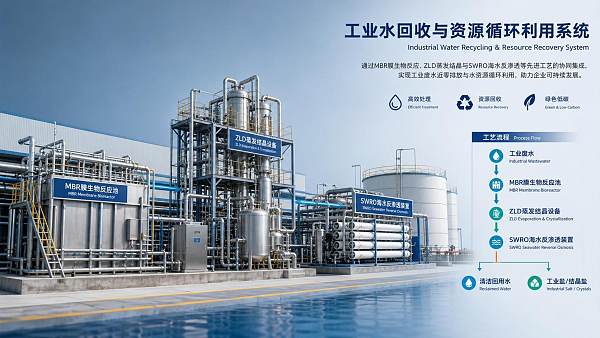
 Industrial Water Recovery Technologies Explained: MBR, ZLD, and SWRO ComparedJun 18, 2026Industrial water recovery explained clearly: compare MBR, ZLD, and SWRO by role, cost, reuse potential, and risk to choose the right system for resilient, compliant operations.
 Net Zero Solutions for Exporters: How Carbon Tariffs Change Project PrioritiesJun 18, 2026Net zero solutions help exporters reduce carbon tariff risk, protect margins, and improve market access. Learn how to prioritize projects, verify emissions data, and stay competitive.
 SWRO Manufacturer Selection Guide: 7 Questions to Ask Before Requesting a QuoteJun 18, 2026SWRO manufacturer selection starts with the right questions. Discover 7 smart checks to compare performance, lifecycle cost, compliance, and service before requesting a quote.
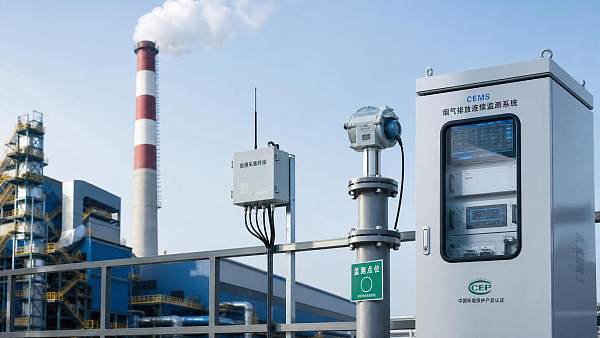
 How to Compare Emissions Data Acquisition Systems for CEMS ComplianceJun 18, 2026Emissions data acquisition systems for CEMS compliance: compare data integrity, audit trails, integration, and resilience to choose a platform that strengthens reporting confidence and plant performance.