







For project managers facing rising landfill fees, hauling limits, and ESG pressure, Sludge Dewatering is no longer a back-end utility—it is a direct cost-control strategy.
By reducing water content, shrinking sludge volume, and improving downstream handling, the right system can reshape the economics of disposal, incineration, or resource recovery.
The practical question is not whether dewatering works, but how much cost it can remove from transport, tipping, storage, compliance, and operational risk.
Why Disposal Costs Rise When Sludge Stays Wet
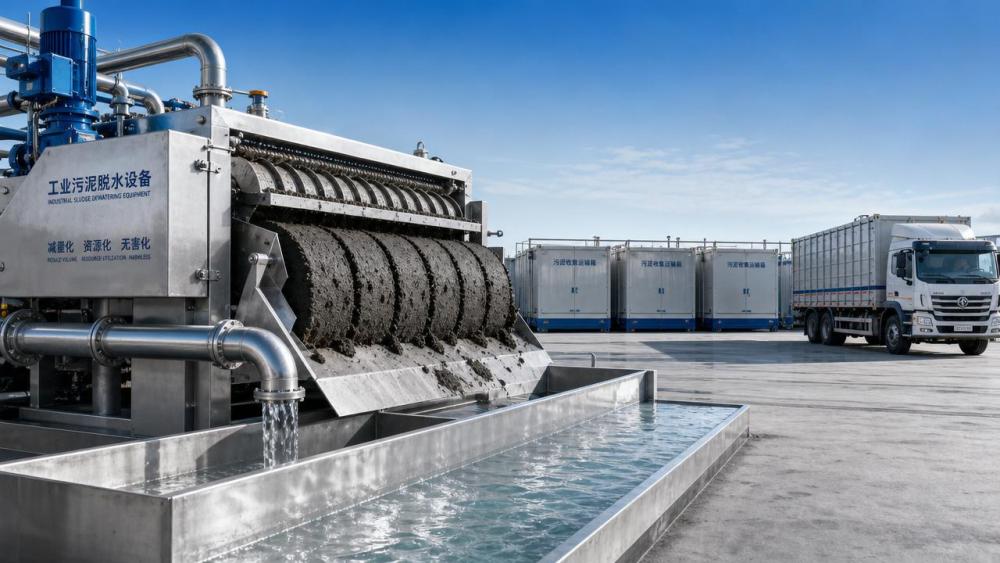
Most sludge disposal budgets are dominated by water, not solids. A wet sludge stream may look unavoidable, but it carries hidden costs everywhere.
Every percentage point of moisture increases weight, hauling frequency, storage demand, odor risk, and downstream fuel consumption if the material is incinerated.
For project managers, this means disposal costs are not just a line item after treatment. They are shaped by process decisions upstream.
Landfill operators often charge by weight or volume, while transport contractors price by truckload, distance, waiting time, and handling complexity.
If sludge remains pumpable, sticky, or unstable, it may need sealed containers, special equipment, additional labor, or more frequent site movements.
In regulated markets, wet sludge can also create leachate management concerns, higher odor complaints, and tighter acceptance conditions at disposal facilities.
Sludge Dewatering cuts costs by attacking these drivers directly. It converts dilute sludge into a cake that is easier to move, store, and treat.
The business value comes from fewer tons shipped, fewer truck movements, lower disposal charges, and better compatibility with landfill, composting, drying, or incineration.
The Main Cost Levers Project Managers Should Track
A strong dewatering business case starts with a simple mass balance. How many wet tons enter the system, and how many cake tons leave?
Dry solids concentration is the key indicator. Moving from 15% to 25% solids can dramatically reduce hauled weight without changing biological treatment performance.
For example, sludge containing five tons of dry solids weighs about 33 tons at 15% solids, but only 20 tons at 25% solids.
That difference affects trucking, tipping fees, container rotation, site traffic, and the number of disposal contracts required during peak production periods.
Project managers should also track polymer consumption, power use, wash water demand, operator time, cake storage needs, and maintenance downtime.
The cheapest dewatering equipment on capital cost may become expensive if it requires excessive chemicals or produces inconsistent cake dryness.
Likewise, the driest cake is not always the best outcome if energy use or cycle time damages project economics.
The right target is the lowest total cost per ton of dry solids safely managed, not simply the highest possible cake solids.
How Dewatering Reduces Hauling and Landfill Fees
Hauling is usually the easiest saving to quantify. Less water means fewer truckloads, lower fuel exposure, and less dependence on limited driver availability.
In remote industrial projects, transport savings can outweigh equipment financing costs, especially where landfill access is distant or road capacity is constrained.
Reduced truck movements also support ESG reporting, because lower diesel use reduces associated emissions and improves site community relations.
Landfill fees are another major lever. If charges are based on weight, every ton of removed water becomes a direct avoided cost.
Where fees depend on classification, better dewatering can also help meet acceptance requirements for stackability, free liquid limits, or stabilization.
A drier cake can reduce the risk of rejected loads, which are costly because they cause re-hauling, storage disruption, and contract penalties.
For municipal wastewater plants, predictable cake quality helps coordinate transport schedules and avoid emergency disposal when weather or plant loading changes.
For industrial facilities, stable dewatering performance protects production continuity, because sludge bottlenecks can force upstream treatment or manufacturing slowdowns.
Why Equipment Selection Determines the Real Savings
Not all Sludge Dewatering technologies deliver the same economic outcome. Belt presses, centrifuges, screw presses, and filter presses serve different project realities.
Centrifuges offer compact footprints and continuous operation. They are useful where space is tight and flow variation can be handled through automation.
Belt filter presses are often valued for simpler operation and lower energy use, but they require wash water and careful odor management.
Screw presses can suit smaller facilities or sludge with lower operator availability, especially where low-speed operation and enclosed design are preferred.
Membrane filter presses can achieve high cake dryness, making them attractive for industrial sludge, hazardous streams, or projects targeting incineration efficiency.
However, filter presses require batch cycle planning, cake discharge handling, cloth cleaning, and realistic maintenance assumptions during procurement evaluation.
The best selection depends on sludge type, solids loading, required dryness, available space, labor skill, chemical behavior, and downstream disposal route.
Project managers should request pilot testing or reference data using similar sludge, not generic brochure numbers from ideal conditions.
The Role of Conditioning, Polymer, and Feed Consistency
Equipment alone does not determine cake quality. Conditioning chemistry often decides whether solids separate cleanly or pass through with the filtrate.
Polymer selection, dose control, mixing energy, and retention time all influence floc strength, drainage rate, centrate quality, and cake release.
Overdosing polymer wastes money and can produce slippery cake, while underdosing reduces capture and sends solids back to wastewater treatment.
Feed consistency is equally important. Sudden shifts in sludge age, pH, oil content, grit, or industrial contaminants can destabilize dewatering performance.
Where possible, project teams should equalize sludge feed, monitor solids concentration, and avoid sending shock loads directly to dewatering equipment.
Instrumentation helps operators respond before costs rise. Useful measurements include feed solids, cake solids, polymer dose, filtrate turbidity, torque, and throughput.
For larger projects, digital dashboards can connect dewatering performance with disposal invoices, revealing the real cost of poor process control.
This visibility turns dewatering from a reactive maintenance area into an actively managed cost-reduction function.
Connecting Dewatering with Incineration, Drying, and Resource Recovery
Disposal strategy should guide dewatering targets. A landfill-focused project may need stackable cake, while incineration requires attention to calorific value.
When sludge is incinerated, excess moisture consumes energy before combustion can effectively destroy organics or recover heat.
Higher cake solids can reduce auxiliary fuel demand, improve furnace stability, and increase the value of waste-to-energy integration.
Where low-temperature drying is used after mechanical dewatering, a drier incoming cake reduces thermal load and improves dryer capacity.
Mechanical dewatering is usually cheaper than thermal evaporation, so removing more water mechanically before drying is often economically sensible.
In some projects, dewatered sludge may support composting, soil amendment, co-processing, or material recovery, depending on contamination and regulations.
Project managers should define the downstream pathway early. Designing dewatering without the disposal endpoint often leads to mismatched equipment and avoidable costs.
A circular economy approach treats sludge not only as waste, but as a stream whose water, energy, and mineral content require intelligent routing.
How to Build a Reliable ROI Case
A credible return-on-investment model should compare current disposal costs against projected costs after dewatering improvements under realistic operating conditions.
Start with baseline data: wet tons per day, dry solids percentage, hauling distance, truck capacity, tipping fee, labor, storage, and rejected-load history.
Then model alternative cake solids scenarios. Even modest improvements can justify investment when disposal fees are high or capacity is limited.
Include operating costs such as polymer, electricity, maintenance parts, wash water, operator hours, laboratory testing, and planned downtime.
Capital costs should include civil works, feed pumps, sludge storage, conveyors, containers, odor control, electrical integration, and control systems.
Do not ignore resilience value. Extra dewatering capacity can prevent emergency hauling, production interruptions, environmental incidents, and non-compliance penalties.
For public-sector projects, the ROI case may also include reduced road traffic, lower emissions, improved landfill life, and stronger ESG performance.
For industrial owners, the strongest argument is often continuity: reliable dewatering protects production by preventing sludge accumulation from becoming a process constraint.
Common Mistakes That Reduce Savings
One common mistake is buying equipment based only on maximum hydraulic capacity. Solids loading and sludge variability matter more for real performance.
Another mistake is underestimating cake handling. A dewatering system fails economically if cake discharge, storage, and loading create labor bottlenecks.
Projects also lose savings when polymer systems are poorly designed, with weak mixing, unreliable dosing pumps, or insufficient make-down time.
Some sites neglect filtrate or centrate quality. Returning excessive solids to the headworks can increase aeration demand and reduce treatment stability.
Maintenance access is often overlooked. If operators cannot safely clean belts, replace wear parts, or inspect bearings, uptime will decline.
Procurement teams should avoid comparing vendor proposals without standardizing assumptions for feed solids, operating hours, cake dryness, and chemical use.
A low bid may become expensive if it depends on unrealistic sludge behavior or excludes auxiliary systems needed for stable operation.
The best specification defines performance guarantees, testing protocols, acceptance criteria, and responsibilities for sludge conditioning and downstream handling.
When Upgrading Dewatering Makes the Most Sense
Dewatering upgrades are especially attractive when landfill fees are rising, transport distances are long, or sludge production is increasing.
They also make sense when plants face odor complaints, limited storage, wet-weather surges, or frequent disposal schedule conflicts.
Industrial facilities should evaluate upgrades when sludge has hazardous characteristics, high salinity, oily content, or strict off-site acceptance requirements.
Projects planning incineration, drying, or ZLD integration should treat dewatering as a core design step, not a secondary package.
However, upgrades should be approached carefully where sludge quantities are small, disposal is inexpensive, or staffing cannot support more complex equipment.
In those cases, simpler systems or regional shared dewatering services may provide better lifecycle value than advanced on-site installations.
The decision should combine technical testing, cost modeling, operational readiness, and regulatory expectations, rather than relying on a single dryness target.
For project managers, the most useful question is whether each extra percentage of dryness produces measurable financial or risk-reduction value.
What Performance Monitoring Should Look Like
After installation, savings must be protected through disciplined monitoring. Dewatering performance can drift because sludge biology and industrial inputs constantly change.
Monthly reviews should compare cake solids, polymer use, energy consumption, hauled tons, disposal invoices, downtime, and maintenance actions.
Operators need clear control limits. If cake dryness falls or filtrate solids rise, corrective action should begin before disposal costs escalate.
Good monitoring also supports compliance. Records can demonstrate that sludge was stabilized, dewatered, transported, and disposed according to permit conditions.
For ESG reporting, reliable data can quantify avoided hauling emissions, reduced landfill demand, and improved resource efficiency.
Advanced facilities may integrate dewatering data with SCADA, asset management, and carbon monitoring platforms for stronger operational transparency.
This is where intelligence-driven environmental infrastructure delivers value: equipment performance, cost control, and compliance evidence reinforce each other.
The goal is not simply to install a press, but to manage sludge as a measurable, optimizable part of the whole treatment system.
Conclusion: Dewatering Is a Cost Strategy, Not Just a Process Step
Sludge Dewatering cuts disposal costs because it removes the most expensive component in sludge: water that must be hauled, handled, or evaporated.
For project managers, the value appears in fewer truckloads, lower tipping fees, better downstream treatment, improved compliance, and reduced operational disruption.
The strongest projects do not chase equipment specifications in isolation. They connect sludge characteristics, dewatering technology, disposal route, and lifecycle cost.
When supported by testing, realistic ROI modeling, and continuous monitoring, dewatering becomes a practical lever for financial control and ESG performance.
In a world of tighter landfill capacity and stricter environmental expectations, smarter dewatering is one of the clearest ways to turn sludge management into measurable value.