



Search
Related News
- 00
0000-00
Thermal Sludge Treatment Options: Drying, Pyrolysis, and Incineration Compared - 00
0000-00
Environmental Engineering for ZLD Projects: Site Data, Permits, and Design Risks - 00
0000-00
Zero Waste Water vs ZLD: Process Choices for Industrial Effluent Reuse - 00
0000-00
Sustainable Waste Management Strategies for Plants With Mixed Waste Streams - 00
0000-00
High Temperature Incineration: Temperature, Residence Time, and Emission Limits
How Industrial Water Purification cuts uptime risks




Industrial Water Purification plays a critical role in reducing uptime risks for operators who rely on stable, compliant, and high-efficiency systems every day. From preventing membrane fouling and scaling to supporting Zero Liquid Discharge performance, the right purification strategy helps keep equipment running, lowers unplanned shutdowns, and protects process continuity. This article explains how smarter water treatment decisions can improve reliability while meeting growing environmental and operational demands.
Why does Industrial Water Purification directly affect uptime risk?
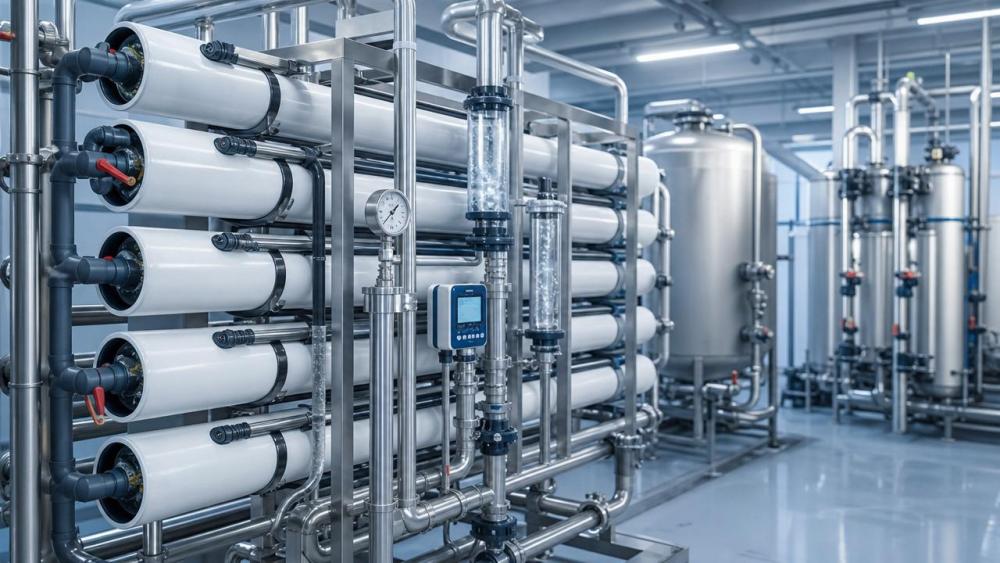
For operators, downtime rarely starts with a dramatic failure. It often begins with unstable feedwater, unnoticed conductivity drift, rising differential pressure, or slow scaling inside RO trains, heat exchangers, and evaporators.
Industrial Water Purification reduces these hidden risks by controlling suspended solids, dissolved salts, silica, hardness, organics, microbes, and corrosive contaminants before they damage production assets or discharge systems.
In complex facilities, water quality affects more than one process line. It influences boiler reliability, cooling efficiency, membrane life, sludge generation, chemical use, wastewater compliance, and even energy consumption in downstream ZLD units.
That is why operators in power, chemicals, food processing, electronics, mining, pharmaceuticals, and desalination-linked industries treat purification not as a utility side issue, but as an uptime protection layer.
- Poor pretreatment increases membrane fouling frequency and shortens cleaning intervals.
- Uncontrolled hardness and silica elevate scaling risk in boilers, RO systems, and evaporators.
- Variable wastewater composition can destabilize ZLD performance and force unscheduled maintenance.
- Inadequate monitoring delays operator response and turns minor deviations into shutdown events.
What operators usually see before a shutdown
Most systems give warning signals first. These include higher pump load, falling permeate flow, frequent CIP demand, unstable pH, increasing turbidity, or inconsistent reject quality. When these are ignored, the cost moves from chemistry adjustment to production interruption.
Which scenarios need tighter Industrial Water Purification control?
Industrial Water Purification requirements change with the process. A cooling tower makeup stream has different risk drivers than ultrapure rinse water, high-salinity wastewater, or seawater RO pretreatment. Operators need scenario-based decisions, not generic designs.
The table below shows how uptime risks shift across common industrial applications and what purification focus usually matters most.
The key lesson is simple: the right Industrial Water Purification strategy starts with process duty and failure mode. A plant that treats all water challenges as the same often overpays in one section and underprotects another.
Where EWRS adds practical value
EWRS is positioned around industrial water, desalination, ZLD, sludge reduction, and emissions-linked environmental infrastructure. That broad view matters because uptime risk rarely stays inside one skid. It moves across water intake, production, wastewater, energy, and compliance.
For operators, this means better guidance on how upstream purification choices affect downstream RO recovery, evaporator loading, sludge volumes, discharge obligations, and ESG reporting pressure.
What technical indicators should operators monitor first?
When budgets and staffing are tight, operators should prioritize indicators that reveal performance drift early. Not every plant needs the same dashboard, but some parameters are consistently useful for Industrial Water Purification risk control.
- Conductivity and resistivity for salt breakthrough and polishing performance.
- Turbidity and SDI for membrane pretreatment stability.
- Differential pressure across filters and RO stages for fouling trend detection.
- pH, hardness, alkalinity, and silica for scaling prediction.
- TOC or COD where organics threaten membranes, resins, or reuse targets.
The next table gives a practical monitoring view that operators can use during routine rounds, troubleshooting, and procurement reviews.
These parameters are more than lab numbers. They are early warning signals for reliability. Plants that react to trends instead of waiting for alarms usually reduce emergency interventions and preserve membrane and pump life.
How should you compare purification options before purchase?
Operators are often asked to support procurement decisions without being given enough time for full engineering review. A practical comparison method can prevent mismatches between promised performance and real operating conditions.
Key decision points
- Define feedwater variability, not just average values. Seasonal shifts, batch discharges, and startup events matter.
- Match purification steps to dominant failure modes such as fouling, scaling, organics, or microbial growth.
- Check maintainability. Spare parts access, cleaning intervals, sensor calibration, and operator workload can outweigh small CAPEX differences.
- Assess downstream impact. Better pretreatment may reduce evaporator energy demand, sludge disposal cost, and compliance risk.
The comparison below is useful when selecting between common Industrial Water Purification routes for general industrial service and water reuse projects.
For many plants, the winning solution is not the deepest treatment train. It is the train that balances uptime, operator skill level, compliance target, and total cost across the full water cycle.
What mistakes increase downtime even when equipment is new?
A new system can still underperform if the plant treats commissioning as the finish line. Industrial Water Purification reliability depends on operation discipline after startup.
Common operator-side mistakes
- Running at design recovery despite changed feedwater chemistry or seasonal temperature shifts.
- Delaying cartridge replacement or CIP because the line is still producing “enough” flow.
- Using laboratory averages instead of real-time trends to judge system health.
- Ignoring reject stream management until ZLD or discharge units become overloaded.
- Separating water treatment decisions from ESG, effluent, and emissions obligations.
EWRS focuses precisely on these cross-system links. In industrial reality, water reuse, sludge reduction, desalination, waste thermal systems, and carbon monitoring increasingly influence the same operating budget and compliance profile.
How do compliance and ESG pressure change purification decisions?
Industrial Water Purification is no longer judged only by whether the plant meets a process specification. Operators now work under tighter scrutiny on discharge quality, water reuse rates, energy intensity, sludge handling, and reporting transparency.
In many regions, plants also need to align with internal environmental targets, customer audits, or export-related carbon and resource reporting expectations. That makes system stability more valuable than short-term savings from underdesigned pretreatment.
Relevant areas to review
- Water reuse objectives and discharge permit conditions.
- Material compatibility and chemical handling practices.
- Monitoring records for traceability and operator accountability.
- Energy impact of high-recovery or ZLD pathways.
EWRS brings a useful perspective here because its intelligence scope extends from membranes and desalination to evaporative concentration, incineration-linked resource recovery, and precision emissions monitoring. That helps operators evaluate purification as part of a broader circular economy system.
FAQ: practical questions operators ask about Industrial Water Purification
How do I know if pretreatment is the real cause of RO problems?
Start with trend data. If cartridge consumption rises, SDI worsens, or differential pressure increases faster than normal, pretreatment is a likely factor. Also compare cleaning frequency, permeate flow decline, and feedwater variability before blaming the membrane itself.
Is ZLD always the best solution for uptime and compliance?
Not always. ZLD can support strict discharge goals, but it adds thermal load, scaling sensitivity, and maintenance complexity. It works best when upstream Industrial Water Purification has already reduced suspended solids, hardness, organics, and unnecessary volume sent to evaporation.
What should operators ask vendors before approving a system?
Ask for feedwater assumptions, cleaning logic, consumable intervals, expected rejection or recovery windows, alarm points, and instrumentation scope. Also ask how the system behaves during seasonal feed changes, startup shocks, or partial-load operation.
Can better purification really lower total cost if CAPEX is higher?
Often yes. A more robust front end may reduce membrane replacement, chemical cleaning, sludge disposal, evaporator steam demand, and unplanned production losses. Operators should compare total lifecycle cost, not purchase price alone.
Why choose us for Industrial Water Purification insight and solution planning?
EWRS is built for industrial teams dealing with demanding water, wastewater, desalination, ZLD, sludge, and emissions-linked infrastructure. That matters when uptime risk is shaped by the whole environmental system, not just one membrane skid or one filter vessel.
If you are reviewing Industrial Water Purification for a new project or troubleshooting an operating line, you can consult on specific issues instead of asking for a generic recommendation.
- Feedwater and wastewater parameter confirmation for reuse, RO, desalination, or ZLD scenarios.
- Process route selection covering pretreatment, membrane stages, polishing, concentration, and sludge handling.
- Delivery planning questions such as instrumentation scope, commissioning priorities, and operator workload.
- Compliance-oriented reviews related to discharge control, ESG pressure, and resource recovery targets.
- Budget and quotation discussions based on lifecycle risk, not only initial equipment cost.
For operators and project teams, the most valuable next step is usually a structured review of water quality, failure history, recovery targets, and maintenance constraints. With that information, Industrial Water Purification decisions become clearer, more defensible, and far less likely to create avoidable downtime later.
Recommended News
 Thermal Sludge Treatment Options: Drying, Pyrolysis, and Incineration ComparedJun 03, 2026Thermal Sludge Treatment compared: discover how drying, pyrolysis, and incineration impact cost, emissions, energy recovery, and smarter sludge decisions.
 Environmental Engineering for ZLD Projects: Site Data, Permits, and Design RisksJun 03, 2026Environmental Engineering for ZLD projects: learn how site data, permits, brine chemistry, and design risks shape compliant, reliable, cost-effective water recovery.
 Zero Waste Water vs ZLD: Process Choices for Industrial Effluent ReuseJun 03, 2026Zero Waste Water or ZLD? Compare process routes, energy, brine handling, compliance risks, and reuse strategies to choose the right industrial effluent solution.
 Sustainable Waste Management Strategies for Plants With Mixed Waste StreamsJun 03, 2026Sustainable Waste Management strategies for mixed waste plants—cut disposal risk, improve ESG readiness, recover resources, and build a smarter circular operating model.