



Search
Related News
- 00
0000-00
Industrial Water Recovery Technologies Explained: MBR, ZLD, and SWRO Compared - 00
0000-00
Net Zero Solutions for Exporters: How Carbon Tariffs Change Project Priorities - 00
0000-00
SWRO Manufacturer Selection Guide: 7 Questions to Ask Before Requesting a Quote - 00
0000-00
How to Compare Emissions Data Acquisition Systems for CEMS Compliance - 00
0000-00
Waste Heat Recovery in Europe: Which Industries See the Fastest ROI?
Guangzhou Power Plant Tender Sets SWRO+MVR Benchmark




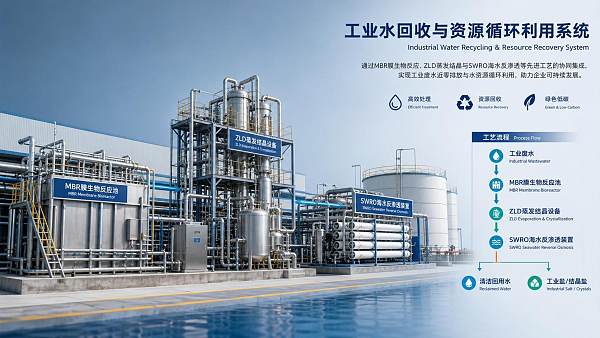
On June 10, 2026, Guangzhou Zhujiang Power Plant launched an EPC tender for a zero-liquid-discharge system for desulfurization wastewater under its 2×600MW coal power environmental replacement project. The notice is drawing attention from thermal power retrofit contractors, water treatment technology suppliers, monitoring system providers, and cross-border industrial vendors because it does more than announce procurement: it specifies a fixed technical route, requires real-time integration with CEMS and ERD modules, and adopts an EU life-cycle carbon accounting standard for ZLD, making the tender relevant not only for project delivery but also for how future international-facing specifications may be written.
What the tender explicitly requires
According to the information provided, the tender covers the desulfurization wastewater zero-liquid-discharge system for Guangzhou Zhujiang Power Plant's 2×600MW coal power environmental replacement project and was released on June 10, 2026.
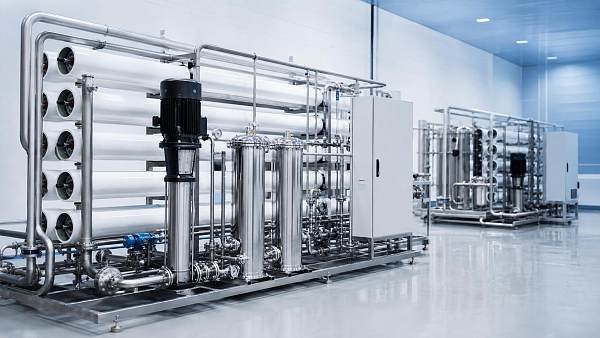
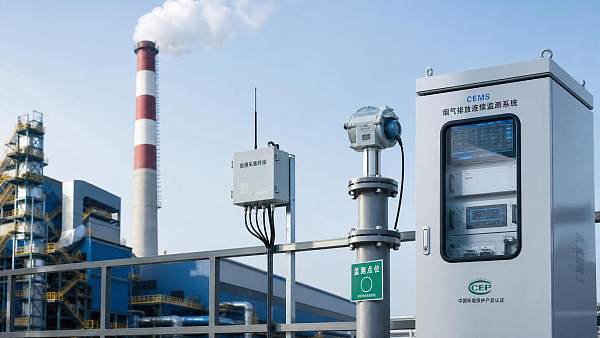
The technical requirement explicitly names a combined process of membrane pre-concentration using SWRO plus crystallization using mechanical vapor recompression, or MVR. The tender also mandates embedded real-time linkage with CEMS and an ERD energy recovery module.
The project is identified as the first thermal power retrofit project in South China to implement the EU EN 14113:2025 ZLD full-life-cycle carbon accounting standard. In addition, the technical specification has been made available for download in English to global suppliers.
Why different market participants are paying attention
For EPC contractors, the room for technical substitution appears narrower
From an industry perspective, EPC participants are likely to focus first on the fact that the process route is not left open-ended. When a tender names SWRO+MVR and also requires CEMS linkage and ERD integration, the impact is most direct at the stages of solution design, subsystem matching, and bid preparation. What deserves closer attention is whether bidders can present an integrated delivery logic rather than treating membranes, crystallization, monitoring, and energy recovery as separate packages.
For equipment and system suppliers, interface capability becomes part of competitiveness
Analysis shows that membrane suppliers, MVR-related vendors, CEMS-linked automation providers, and ERD module suppliers may all be affected because the tender language points to a system-level procurement approach. The relevant business impact is less about standalone product visibility and more about interface compatibility, data coordination, and whether documentation can support a project framed around both discharge control and carbon-accounting expectations.
For international-facing vendors, the English specification changes the bidding context
Observably, the opening of an English technical specification to global suppliers matters for companies involved in export-oriented industrial supply or cross-border project participation. The immediate area to watch is not only technical compliance, but also whether supplier materials, proposal language, and qualification documents are ready for an internationally comparable tender environment.
For plant owners and downstream users, compliance is being tied more closely to operation
For procurement-side operators and end users, the inclusion of real-time CEMS linkage suggests attention is shifting from isolated wastewater treatment equipment to operating visibility and connected compliance management. The practical implication lies in procurement evaluation, acceptance logic, and later operational coordination between environmental systems and plant control requirements.
What companies should watch now
Track whether technical route specification becomes more common
Analysis shows that one key issue is whether future tenders continue to name specific combined routes such as SWRO+MVR rather than broadly requesting ZLD outcomes. For suppliers and integrators, this affects how early they need to align product portfolios and partner networks before formal bid windows open.
Prepare for dual review of compliance and carbon-accounting language
What deserves closer attention is the coexistence of process requirements and the EU EN 14113:2025 ZLD life-cycle carbon accounting standard. Companies involved in bidding, supply, or technical support may need to review whether their technical documents, operating descriptions, and supporting materials are structured for both engineering evaluation and carbon-accounting-related scrutiny.
Do not treat CEMS and ERD clauses as optional add-ons
From an industry perspective, the mandatory wording around real-time CEMS linkage and ERD energy recovery means these elements are part of the core delivery expectation, not peripheral accessories. This affects proposal completeness, subsystem procurement, interface planning, and communication between prime contractors and specialist vendors.
Strengthen English-language documentation and supplier coordination
Because the technical specification has been opened to global suppliers in English, companies should pay attention to document readiness, terminology consistency, and the clarity of qualification files. For firms aiming at similar projects, the operational issue is not only whether they have the right equipment, but whether they can present it in a procurement format suitable for international comparison.
How this tender should be read at this stage
Observably, this development is more than a routine project notice, but it should not yet be overstated as a settled market standard across the sector. Analysis shows that the stronger signal lies in how the tender combines four elements in one procurement framework: a named SWRO+MVR route, mandatory CEMS linkage, ERD energy recovery, and an EU-aligned life-cycle carbon accounting standard.
It is more appropriate to understand this as a directional industry signal with practical near-term implications. It indicates how some thermal power retrofit procurement may begin to connect wastewater treatment performance, energy recovery, monitoring integration, and internationally legible documentation. Whether this becomes widely replicated still requires continued observation.
What this means for the market now
At this point, the tender is best understood as a concrete procurement event with broader signaling value. The confirmed fact is that Guangzhou Zhujiang Power Plant has defined a specific ZLD route and related integration requirements in an EPC tender released on June 10, 2026. The broader industry takeaway, based on analysis, is that suppliers and project participants should pay closer attention to integrated technical compliance, carbon-accounting language, and international bidding readiness, while still watching whether similar requirements appear in subsequent projects before treating them as a fully established sector-wide rule.
Basis of this article
This article is generated based on the user-provided news title, event date, and event summary. The confirmed factual basis includes the tender release date, the project description, the specified SWRO+MVR process route, the mandatory CEMS and ERD requirements, the reference to EU EN 14113:2025 ZLD full-life-cycle carbon accounting, and the opening of the English technical specification to global suppliers.
For this type of industry update, commonly relevant source categories may include official tender announcements, company notices, industry association releases, authoritative media reports, and standard-setting organization documents. A specific official source link was not provided in the input, so further verification remains necessary. Areas for continued monitoring include any later official clarification, changes in tender language, and whether similar specification patterns appear in subsequent thermal power retrofit projects.
Recommended News
 Industrial Water Recovery Technologies Explained: MBR, ZLD, and SWRO ComparedJun 18, 2026Industrial water recovery explained clearly: compare MBR, ZLD, and SWRO by role, cost, reuse potential, and risk to choose the right system for resilient, compliant operations.
 Net Zero Solutions for Exporters: How Carbon Tariffs Change Project PrioritiesJun 18, 2026Net zero solutions help exporters reduce carbon tariff risk, protect margins, and improve market access. Learn how to prioritize projects, verify emissions data, and stay competitive.
 SWRO Manufacturer Selection Guide: 7 Questions to Ask Before Requesting a QuoteJun 18, 2026SWRO manufacturer selection starts with the right questions. Discover 7 smart checks to compare performance, lifecycle cost, compliance, and service before requesting a quote.
 How to Compare Emissions Data Acquisition Systems for CEMS ComplianceJun 18, 2026Emissions data acquisition systems for CEMS compliance: compare data integrity, audit trails, integration, and resilience to choose a platform that strengthens reporting confidence and plant performance.