



Search
Related News
- 00
0000-00
Thermal Sludge Treatment Options: Drying, Pyrolysis, and Incineration Compared - 00
0000-00
Environmental Engineering for ZLD Projects: Site Data, Permits, and Design Risks - 00
0000-00
Zero Waste Water vs ZLD: Process Choices for Industrial Effluent Reuse - 00
0000-00
Sustainable Waste Management Strategies for Plants With Mixed Waste Streams - 00
0000-00
High Temperature Incineration: Temperature, Residence Time, and Emission Limits
Industrial Wastewater Treatment mistakes that raise costs




Industrial Wastewater Treatment projects often fail financially for reasons that are preventable. The issue is rarely a single membrane, pump, or reactor.
Costs rise when planning misses wastewater variability, pretreatment is undersized, sludge is underestimated, or energy demand is ignored. Small errors then compound across operation, maintenance, and compliance.
In complex industrial ecosystems, Industrial Wastewater Treatment must balance water recovery, discharge control, ESG obligations, and asset reliability. That balance requires disciplined lifecycle thinking, not only equipment selection.
Industrial Wastewater Treatment cost fundamentals
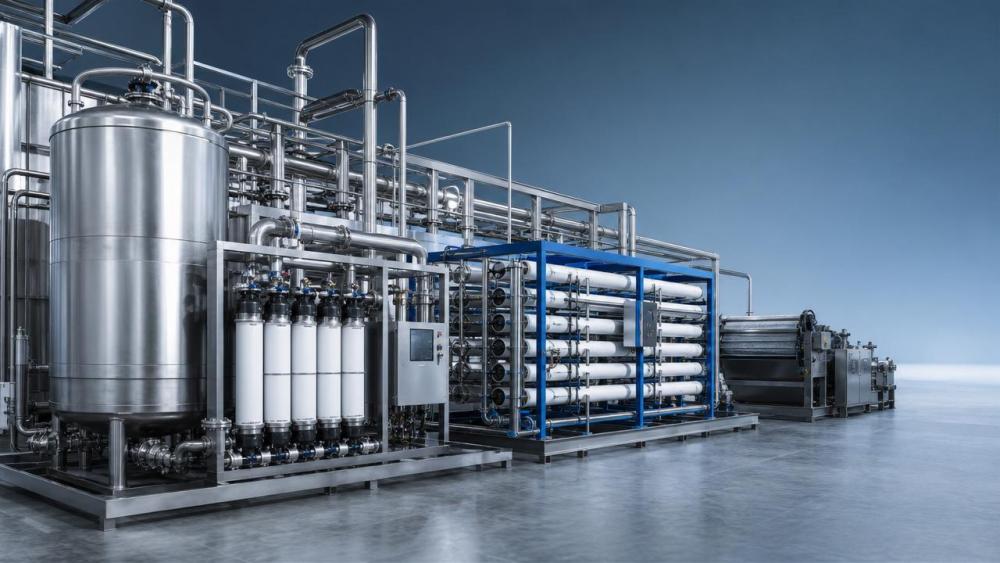
Industrial Wastewater Treatment includes physical, chemical, biological, and thermal processes used to remove pollutants and recover water or resources from industrial effluent.
The real cost structure extends beyond capital expenditure. It includes chemicals, electricity, membranes, labor, sludge disposal, downtime, spare parts, and regulatory risk.
Systems serving ZLD, UPW support, desalination pretreatment, sludge dewatering, or carbon-linked compliance face especially high penalties when design assumptions are wrong.
A low-bid plant can become the most expensive option if it suffers fouling, unstable discharge quality, or emergency shutdowns. Lifecycle cost matters more than purchase price.
Where cost escalation usually begins
- Inadequate influent characterization
- Poor pretreatment for oils, solids, hardness, or toxic shocks
- Overreliance on a single process step
- Ignoring sludge and concentrate management
- Underestimating energy intensity and cleaning frequency
Current industry pressures shaping Industrial Wastewater Treatment decisions
Industrial Wastewater Treatment now sits at the intersection of water scarcity, carbon accountability, stricter discharge standards, and resource recovery economics.
Facilities are being pushed to reuse more water, cut emissions, and document compliance with greater precision. That raises the cost of avoidable mistakes.
For intelligence-led platforms such as EWRS, these pressures confirm that treatment design cannot be isolated from thermodynamics, carbon logic, and long-tail operating cash flow.
The most common Industrial Wastewater Treatment mistakes that raise costs
1. Treating average flow as the design basis
Many systems are designed around average data instead of peak load, batch discharge, seasonal shifts, or cleaning events. Equalization is then too small or absent.
The result is unstable pH, biological upset, membrane fouling, chemical overuse, and permit excursions. Average conditions never pay the emergency bill.
2. Underdesigning pretreatment
Pretreatment is often seen as a secondary cost. In reality, it protects every downstream asset.
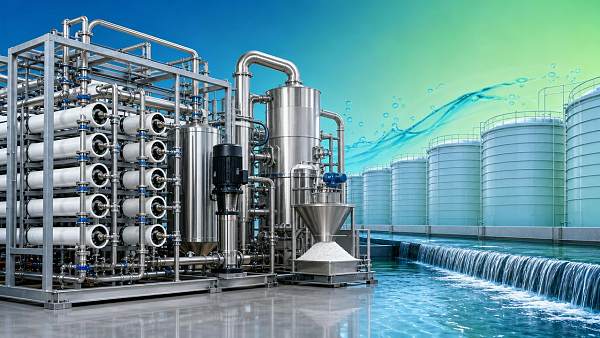
If suspended solids, oil, silica, hardness, or heavy metals are not controlled early, RO membranes, evaporators, biological units, and filter presses all become more expensive to run.
3. Ignoring sludge as a primary cost driver
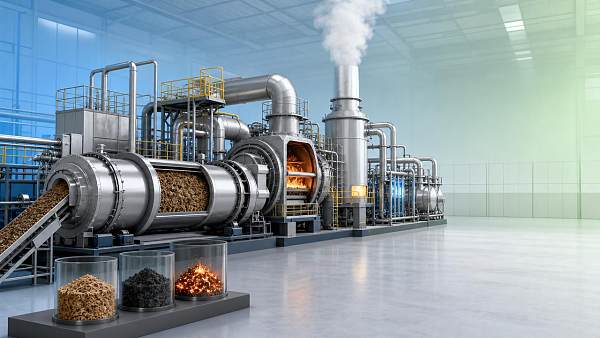
Industrial Wastewater Treatment does not end when water meets discharge limits. Sludge still requires thickening, dewatering, drying, transport, and disposal.
Plants that overlook polymer demand, cake dryness, or landfill constraints often discover that sludge becomes the largest operating expense after energy.
4. Choosing low CAPEX over low lifecycle cost
Cheaper pumps, lower-grade materials, limited automation, and minimal redundancy may reduce initial budget pressure. They usually increase maintenance and production risk later.
Corrosion, scaling, and unplanned shutdowns destroy savings quickly in harsh industrial service.
5. Misjudging energy intensity
High-recovery systems, MVR crystallizers, thermal concentration, high-pressure desalination pretreatment, and advanced oxidation can consume significant power.
Without energy modeling, the Industrial Wastewater Treatment train may meet water goals while weakening carbon performance and plant economics.
6. Weak instrumentation and data visibility
Poor sensor placement or unreliable analyzers cause delayed response to scaling, toxicity spikes, or discharge drift.
In modern compliance environments, bad data creates operational waste and legal exposure. Monitoring is a control tool, not a reporting afterthought.
Why these mistakes matter across industrial sectors
Industrial Wastewater Treatment mistakes affect more than utility budgets. They can disrupt production continuity, environmental reputation, and expansion approvals.
This is especially relevant in integrated sectors where water, waste, energy, and emissions interact tightly.
Practical ways to reduce Industrial Wastewater Treatment cost risk
Cost control starts before equipment procurement. It begins with better process understanding and stronger decision criteria.
Build the design around variability
- Sample across shifts, seasons, and cleaning cycles
- Design for peak pollutant loading, not average only
- Include equalization and buffering where variability is high
Protect downstream processes aggressively
- Remove solids and oil before membranes or biology
- Control hardness, silica, and scaling ions early
- Use pilot testing for difficult wastewater matrices
Model full lifecycle cost
A credible Industrial Wastewater Treatment business case should compare CAPEX, energy, chemicals, membrane life, sludge disposal, operator time, and downtime risk.
This approach often changes the preferred process train, especially for ZLD or high-recovery reuse systems.
Connect treatment to ESG and digital monitoring
Treatment performance should be linked with energy intensity, emissions factors, and compliance records. That creates a clearer picture of real environmental efficiency.
Digital twins, trend analysis, and predictive maintenance can reveal hidden cost drivers before they become failures.
A disciplined next step for better treatment outcomes
Industrial Wastewater Treatment succeeds when design teams treat water chemistry, thermal load, sludge volume, and compliance data as one connected system.
The most expensive mistakes usually come from fragmented decisions. Pretreatment is separated from recovery, operations are separated from disposal, and energy is separated from ESG.
A stronger path is to review influent variability, stress-test lifecycle assumptions, and validate monitoring architecture before final process selection.
For complex water reuse, desalination support, WTE residue streams, or ZLD applications, intelligence-led evaluation can prevent years of hidden losses.
If Industrial Wastewater Treatment costs are rising, start with the fundamentals: pretreatment, energy, sludge, data, and total lifecycle economics. That is where reliable savings are usually found.
Recommended News
 Thermal Sludge Treatment Options: Drying, Pyrolysis, and Incineration ComparedJun 03, 2026Thermal Sludge Treatment compared: discover how drying, pyrolysis, and incineration impact cost, emissions, energy recovery, and smarter sludge decisions.
 Environmental Engineering for ZLD Projects: Site Data, Permits, and Design RisksJun 03, 2026Environmental Engineering for ZLD projects: learn how site data, permits, brine chemistry, and design risks shape compliant, reliable, cost-effective water recovery.
 Zero Waste Water vs ZLD: Process Choices for Industrial Effluent ReuseJun 03, 2026Zero Waste Water or ZLD? Compare process routes, energy, brine handling, compliance risks, and reuse strategies to choose the right industrial effluent solution.
 Sustainable Waste Management Strategies for Plants With Mixed Waste StreamsJun 03, 2026Sustainable Waste Management strategies for mixed waste plants—cut disposal risk, improve ESG readiness, recover resources, and build a smarter circular operating model.