



Search
Related News
- 00
0000-00
Mechanical Sludge Dewatering Problems: Low Cake Solids, Blinding, and Polymer Issues - 00
0000-00
When to Use a UV Oxidation System for VOC and TOC Reduction in Water Treatment - 00
0000-00
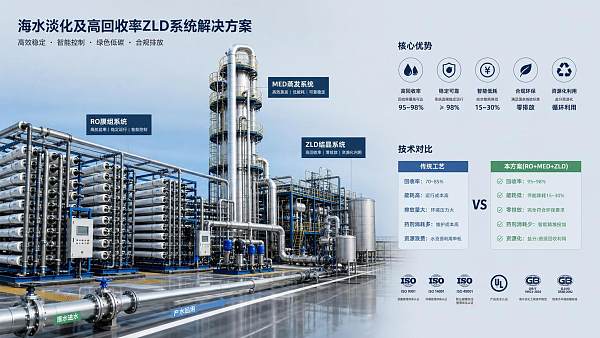
Industrial Desalination Technology Comparison: RO, MED, and ZLD Use Cases - 00
0000-00
How to Evaluate a Sludge Dryer Manufacturer for Capacity, Energy Use, and Service - 00
0000-00
Industrial Water Efficiency: How to Measure Savings Across High-Use Processes
China Sets Data-Interface Rule for Export CEMS




On June 16, 2026, China’s Ministry of Ecology and Environment released a trial compliance guide for exported environmental monitoring equipment that changes the export baseline for CEMS products. The key shift is that, starting September 1, 2026, CEMS devices shipped to 32 overseas markets including the EU, South Korea, and Canada must leave the factory with an ISO 14064-3:2023-compatible data output protocol module and the ability to connect directly to national carbon-regulation cloud platforms. For manufacturers, exporters, integrators, customs-facing teams, and overseas buyers, this is worth close attention because it moves data-interface readiness from a technical option to a trade-facing compliance condition tied to clearance timing.
What the new export condition formally requires
The confirmed information is limited but clear. The Ministry of Ecology and Environment issued the Compliance Guide for Export Environmental Monitoring Equipment (Trial) on June 16, 2026. Under that guide, all CEMS equipment exported to 32 countries, including the EU, South Korea, and Canada, must be pre-installed at the factory with a data output protocol module compatible with ISO 14064-3:2023 from September 1, 2026.
The same summary states that the equipment must support direct connection to the carbon-regulation cloud platforms used by those destination countries. If the interface is not pre-installed, customs clearance will trigger a technical compliance recheck, and the average clearance cycle will be extended by 7 to 12 working days.
Where the impact is likely to appear first
Export manufacturers face a new factory-stage compliance gate
From an industry perspective, the most direct impact falls on CEMS manufacturers shipping to the covered markets. The rule change affects product configuration before shipment rather than only paperwork at the border. What deserves closer attention is whether export models, firmware versions, and interface modules are aligned with the new requirement before delivery scheduling is locked in.
In practical terms, manufacturers may need to review technical specifications, factory release checklists, product documentation, and shipment readiness records to reduce the risk of customs rechecks linked to missing interface capability.
Export trading and delivery teams may see pressure on lead times
For export traders and delivery coordinators, the compliance issue is not only whether a product can be sold, but whether it can clear on time. The confirmed consequence for non-preinstalled devices is a customs technical compliance review and an average 7–12 working day delay. Analysis shows this makes interface readiness relevant to booking schedules, handover timing, and customer delivery commitments.
Teams handling export documentation should therefore pay closer attention to how technical descriptions, model configurations, and supporting compliance materials are presented in shipment files, even though the detailed documentation format has not been provided in the input.
Buyers and procurement teams may shift technical review upstream
Overseas buyers, project procurement teams, and domestic sourcing teams involved in export orders may also be affected because interface capability now appears tied to market access and delivery reliability. Observably, procurement review may need to move beyond core monitoring performance and include whether the supplied CEMS unit is factory-preloaded for ISO 14064-3:2023-compatible data output and direct cloud connectivity.
This could influence technical bid alignment, supplier qualification review, and acceptance conditions, especially where delivery timing is sensitive and customs delay would create downstream project risk.
Compliance, testing, and service roles may need tighter coordination
Compliance staff, testing support providers, and after-sales teams are also likely to see a change in workload. Analysis shows that once data output compatibility and direct platform connectivity become explicit export conditions, questions may arise around technical file consistency, interface verification, and post-delivery support readiness. The input does not provide a formal execution template, so this remains an area to monitor rather than a confirmed operating rule.
What companies should review before September 1
Check whether export models are configured at the factory stage
The immediate practical issue is whether covered CEMS products are being released with the required module already installed. It is more appropriate to understand this as a front-end compliance checkpoint, because the rule summary specifically ties the requirement to factory pre-installation rather than later modification.
Revisit technical files and shipment-facing records
Companies should closely review technical descriptions, product configuration records, and any compliance materials used in export declarations or customer submissions. The input does not specify mandatory document names or certificate formats, so the priority is not to assume a final paperwork standard, but to make sure internal records can consistently show that the required interface capability exists.
Assess delivery plans for orders bound for the covered markets
Because the stated consequence is a customs technical compliance review with an average delay of 7–12 working days for non-compliant shipments, companies should watch delivery windows, contract milestones, and procurement timing for orders going to the specified destinations. Analysis shows this is particularly relevant for projects with fixed installation schedules or coordinated cross-border logistics.
Track further clarification in execution language
The guide is described as a trial document, and the input does not provide additional wording on verification methods, customs evidence format, or destination-platform connection testing. What deserves closer attention is any later clarification in official language, trade practice, buyer specifications, or market feedback that could refine how the rule is applied in day-to-day export operations.
Why this looks like an execution signal, not just a policy headline
Analysis shows that the most important feature of this development is its operational design. The rule does not remain at the level of a broad decarbonization statement; it links a technical interface requirement to export clearance consequences and a defined effective date. That makes it more than a general policy direction.
At the same time, it is still more appropriate to understand this as an execution signal with details still to be watched, rather than a fully transparent implementation framework. The summary confirms the mandatory interface requirement and the customs recheck consequence, but it does not yet answer every practical question about evidence standards, testing depth, or how buyers and authorities in each destination will interpret direct cloud connectivity.
How the market should read this stage of the change
For the industry, this update is best read as a concrete compliance threshold for export CEMS equipment rather than a symbolic standards reference. The main significance lies in bringing data-interface compatibility into product release, export preparation, and delivery-risk management.
A neutral reading is that the rule has already established a clear direction and an effective date, while the finer points of implementation still require continued observation. Companies involved in export manufacturing, procurement, customs preparation, and project delivery should treat the requirement seriously now, but avoid assuming execution details that have not yet been confirmed in the provided information.
Basis of this article and what still needs verification
This article is generated from the user-provided news title, event date, and event summary. It does not rely on additional unverified facts. For developments of this kind, relevant source categories typically include official regulatory notices, releases from supervisory authorities, customs or trade-administration information, industry association updates, standards organization documents, and reporting by authoritative media.
No specific official source link was provided in the input, so the exact official publication path still needs to be verified on an ongoing basis. Further observation is also needed on any detailed implementation language, certification and compliance interpretation, procurement document changes, bid specification updates, market feedback, and how companies actually execute the requirement in export operations.
Recommended News
 Mechanical Sludge Dewatering Problems: Low Cake Solids, Blinding, and Polymer IssuesJun 19, 2026Mechanical sludge dewatering problems causing low cake solids, blinding, or polymer instability? Discover practical fixes, troubleshooting steps, and proven ways to improve daily performance.
 When to Use a UV Oxidation System for VOC and TOC Reduction in Water TreatmentJun 19, 2026UV oxidation system selection starts with fit: learn when it best reduces VOC and TOC, protects reuse quality, and supports compliance, ZLD, and membrane reliability.
 Industrial Desalination Technology Comparison: RO, MED, and ZLD Use CasesJun 19, 2026Industrial desalination technology comparison of RO, MED, and ZLD use cases. Learn which system best fits recovery goals, energy costs, compliance demands, and long-term water security.
 How to Evaluate a Sludge Dryer Manufacturer for Capacity, Energy Use, and ServiceJun 19, 2026Sludge dryer manufacturer selection starts with capacity, energy use, and service. Learn how to compare suppliers, cut lifecycle risk, and choose a reliable long-term partner.