



Search
Related News
- 00
0000-00
Thermal Sludge Treatment Options: Drying, Pyrolysis, and Incineration Compared - 00
0000-00
Environmental Engineering for ZLD Projects: Site Data, Permits, and Design Risks - 00
0000-00
Zero Waste Water vs ZLD: Process Choices for Industrial Effluent Reuse - 00
0000-00
Sustainable Waste Management Strategies for Plants With Mixed Waste Streams - 00
0000-00
High Temperature Incineration: Temperature, Residence Time, and Emission Limits
Thermal Desalination Still Fits High-Salinity Water




For industrial leaders facing brine concentration limits, volatile water costs, and tightening ESG rules, Thermal Desalination remains a practical answer where salinity overwhelms conventional membranes.
From seawater desalination plants to complex ZLD systems, it delivers stable performance under extreme conditions while supporting resource recovery, compliance, and long-term operational resilience.
When Thermal Desalination becomes the better fit
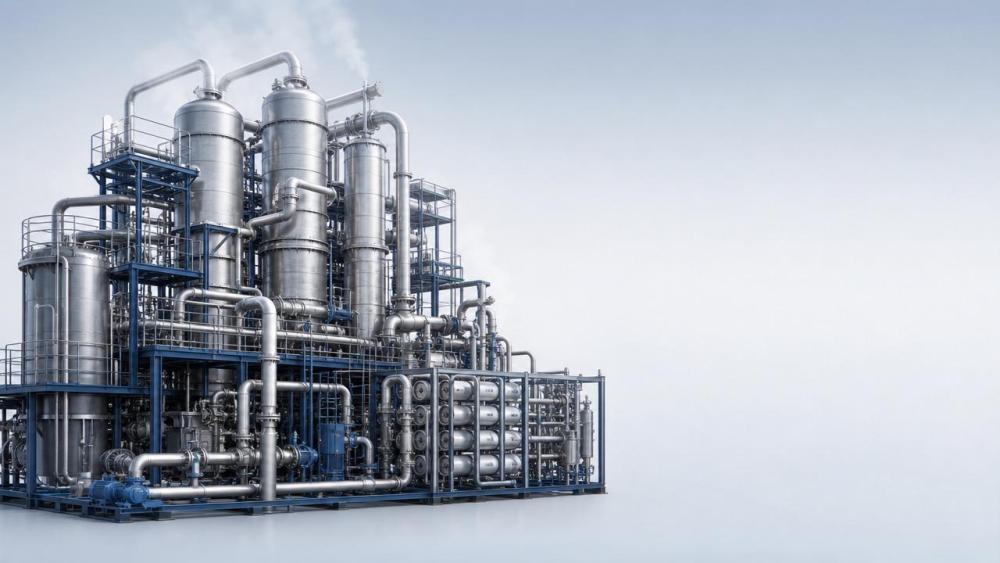
Thermal Desalination is not the first answer for every water stream. It becomes valuable when dissolved solids, scaling risk, or feed variability defeat membrane-based treatment.
In integrated water strategy, the key question is not technology preference. The real question is whether the water chemistry demands evaporation, distillation, or hybrid concentration steps.
EWRS tracks this decision point across desalination, ZLD, industrial reuse, and resource recovery projects. The strongest cases share one pattern: salinity is high, reliability matters, and discharge limits are unforgiving.
Core signals that point toward thermal systems
- TDS rises beyond economical membrane recovery windows.
- Frequent fouling causes unstable production and rising cleaning costs.
- Brine disposal options are restricted by regulation or geography.
- Valuable salts or distilled water must be recovered consistently.
- Waste heat is available and can offset thermal energy demand.
Scenario one: seawater desalination plants in harsh coastal conditions
Seawater desalination plants often prefer SWRO for efficiency. Yet some coastal sites face algal blooms, extreme temperature swings, and feed salinity spikes that reduce membrane stability.
Here, Thermal Desalination still fits high-salinity water because it tolerates difficult feed conditions better. Multi-effect distillation and related processes can protect continuity when intake quality changes abruptly.
The deciding factor is usually water security, not only energy cost. Where uninterrupted potable or industrial supply is critical, operational robustness can justify thermal investment.
What to judge at this stage
- Seasonal salinity and organic load variation.
- Availability of low-cost steam or recovered heat.
- Required water quality stability for downstream industry.
- Land footprint and corrosion control needs.
Scenario two: ZLD systems treating industrial high-salt wastewater
In chemical, mining, textile, and power applications, wastewater may contain mixed salts, organics, silica, and hardness. These streams quickly expose the limits of conventional concentration routes.
Thermal Desalination becomes central in ZLD systems once brine reaches high osmotic pressure. Evaporators and crystallizers then move from optional polishing units to process-critical assets.
This is especially true when regulators tighten discharge permits. In those cases, stable volume reduction and dry solids recovery matter more than chasing maximum membrane recovery.
Practical judgment points for ZLD projects
- Boiling point elevation and crystallization behavior.
- Compatibility with MVR, forced circulation, or falling film designs.
- Pre-treatment demands for oil, organics, and suspended solids.
- Recovered salt quality and disposal pathway.
Scenario three: resource recovery where water is only part of the value
Some projects are not only about clean water. They target lithium-bearing brine, industrial salt recovery, acid reuse, or condensate for boiler return.
In these cases, Thermal Desalination supports separation stability and product control. The process can create a cleaner split between reusable water and concentrated materials.
That changes project economics. Instead of viewing thermal treatment only as a cost center, operators can evaluate it as a compliance and recovery platform.
How needs differ across high-salinity water scenarios
Different water sources demand different Thermal Desalination designs. A clear comparison prevents overdesign, under-pre-treatment, and unrealistic operating assumptions.
How to match Thermal Desalination to the right operating context
A good match starts with chemistry, then energy, then compliance. Technology selection should never begin with vendor labels alone.
Recommended evaluation steps
- Map full water composition, not just TDS.
- Test scaling tendency across temperature and concentration ranges.
- Quantify waste heat, electricity price, and uptime targets.
- Define discharge, reuse, and recovered solids requirements.
- Compare standalone thermal and hybrid membrane-thermal routes.
Hybrid design is often the strongest answer. Membranes can handle front-end bulk desalting, while Thermal Desalination treats the final, difficult concentrate.
This approach lowers total energy use while preserving ZLD capability. It also creates flexibility as water chemistry evolves over the asset life.
Common misjudgments that weaken project performance
Many projects fail in the planning stage, not the equipment stage. The most common mistake is using average water data instead of worst-case operating envelopes.
Another mistake is evaluating Thermal Desalination only through energy intensity. That ignores outage risk, brine trucking cost, permit exposure, and future water scarcity.
Some systems also underestimate sludge, antiscalant interactions, and non-condensable gases. These details can reduce heat transfer and raise maintenance frequency.
Finally, projects often separate ESG reporting from technical design. In reality, water reuse rate, discharge elimination, and energy sourcing directly affect compliance narratives.
Why this matters in broader industrial and ESG strategy
For EWRS, Thermal Desalination sits at the intersection of water security, circularity, and emissions accountability. It is not an isolated utility choice.
In industrial ecosystems, the same site may combine desalination, ZLD, sludge handling, waste heat recovery, and carbon monitoring. Decisions should reflect that full infrastructure picture.
When designed well, Thermal Desalination strengthens compliance resilience and supports measurable resource recovery. That matters as export markets, financing, and permitting all become more ESG-sensitive.
A practical next step for high-salinity water decisions
Start with a scenario-based feasibility review. Classify the stream as seawater, industrial brine, or recovery-focused concentrate, then test the real operating extremes.
Next, build a comparison between membrane-only, thermal-only, and hybrid treatment. Include CAPEX, OPEX, downtime risk, disposal cost, and compliance exposure.
Where high salinity, unstable chemistry, or strict discharge limits dominate, Thermal Desalination often proves its value beyond simple water production metrics.
For organizations planning resilient water infrastructure, that is the right lens: match the scenario, define the constraints, and let Thermal Desalination solve the part membranes cannot.
Recommended News
 Thermal Sludge Treatment Options: Drying, Pyrolysis, and Incineration ComparedJun 03, 2026Thermal Sludge Treatment compared: discover how drying, pyrolysis, and incineration impact cost, emissions, energy recovery, and smarter sludge decisions.
 Environmental Engineering for ZLD Projects: Site Data, Permits, and Design RisksJun 03, 2026Environmental Engineering for ZLD projects: learn how site data, permits, brine chemistry, and design risks shape compliant, reliable, cost-effective water recovery.
 Zero Waste Water vs ZLD: Process Choices for Industrial Effluent ReuseJun 03, 2026Zero Waste Water or ZLD? Compare process routes, energy, brine handling, compliance risks, and reuse strategies to choose the right industrial effluent solution.
 Sustainable Waste Management Strategies for Plants With Mixed Waste StreamsJun 03, 2026Sustainable Waste Management strategies for mixed waste plants—cut disposal risk, improve ESG readiness, recover resources, and build a smarter circular operating model.