



Search
Related News
- 00
0000-00
Thermal Sludge Treatment Options: Drying, Pyrolysis, and Incineration Compared - 00
0000-00
Environmental Engineering for ZLD Projects: Site Data, Permits, and Design Risks - 00
0000-00
Zero Waste Water vs ZLD: Process Choices for Industrial Effluent Reuse - 00
0000-00
Sustainable Waste Management Strategies for Plants With Mixed Waste Streams - 00
0000-00
High Temperature Incineration: Temperature, Residence Time, and Emission Limits
How Circular Economy Projects Avoid Hidden Costs




How Circular Economy Projects Avoid Hidden Costs
Circular Economy projects promise lower waste, stronger ESG performance, and new resource value—but hidden costs can quickly erode expected returns.
For business evaluators, the challenge is not only selecting advanced water treatment, waste-to-energy, desalination, or carbon monitoring technologies.
The real task is understanding lifecycle risks behind permitting, energy consumption, maintenance, compliance data, and long-term asset reliability.
Rigorous technical due diligence and strategic cost modeling help organizations build Circular Economy infrastructure that remains profitable, compliant, and resilient.
Why Circular Economy Cost Checks Matter Before Investment
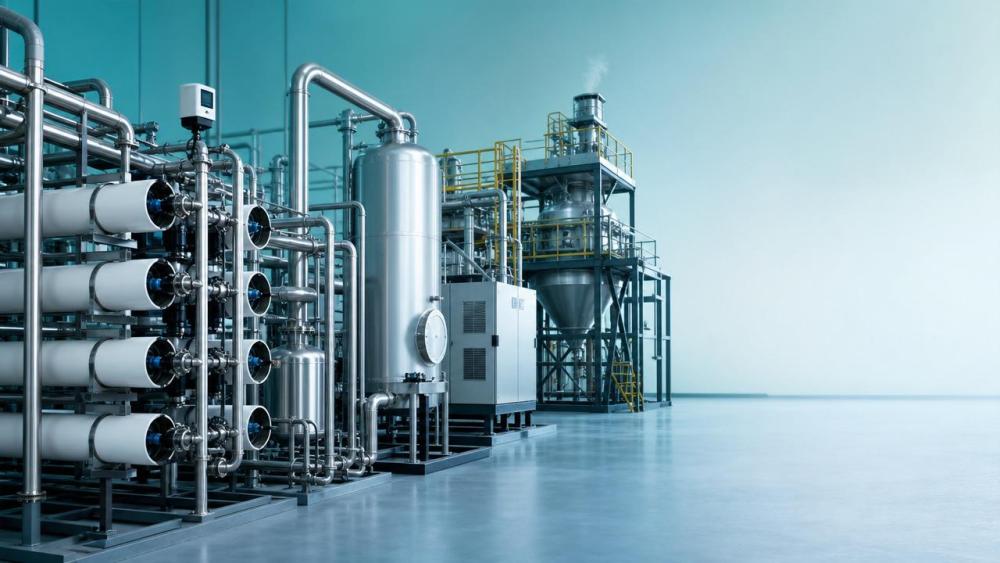
Circular Economy assets often look attractive in feasibility reports because recovered water, electricity, heat, metals, or carbon credits create visible revenue lines.
However, hidden costs emerge when projects move from presentation slides to harsh operating conditions, variable waste streams, and regulatory audits.
A desalination plant may suffer membrane fouling faster than expected. A ZLD system may face crystallizer scaling under high-salt wastewater.
A waste-to-energy facility may spend more on flue gas treatment, ash stabilization, or continuous emission monitoring than planned.
Checklist-based evaluation prevents these issues from being treated as minor technical details. It turns Circular Economy planning into a disciplined risk process.
Core Checklist for Avoiding Circular Economy Hidden Costs
Use the following checklist before approving budgets, EPC contracts, PPP concessions, technology upgrades, or ESG-linked financing for Circular Economy projects.
- Map every material input, including water chemistry, waste composition, sludge solids, brine concentration, auxiliary chemicals, and seasonal quality variation.
- Quantify energy demand under realistic loads, not ideal design points, especially for RO pumps, MVR evaporators, dryers, and incineration auxiliaries.
- Verify permitting pathways early, including discharge limits, air emissions, hazardous residues, carbon reporting, odor rules, and community consultation obligations.
- Stress-test OPEX assumptions with sensitivity scenarios for electricity prices, membrane replacement, reagent consumption, labor costs, and spare part logistics.
- Demand proven performance data from comparable feed conditions, because generic references rarely reflect local Circular Economy operating complexity.
- Evaluate maintenance access, redundancy, bypass logic, automation quality, and shutdown procedures before calculating annual availability or cash flow.
- Audit monitoring architecture, ensuring CEMS, flow meters, carbon data systems, and laboratory protocols produce defensible compliance evidence.
- Model residue management costs, including ash, salts, filter cake, spent membranes, concentrated brine, sludge, and contaminated packaging.
- Check contract risk allocation for feedstock quality, utility interruption, regulatory change, performance guarantees, liquidated damages, and force majeure events.
- Calculate lifecycle value beyond payback, including asset degradation, refinancing conditions, carbon pricing exposure, insurance, and end-of-life obligations.
Water Reuse and ZLD: Where Costs Often Hide
Industrial water reuse is central to many Circular Economy programs, especially in chemicals, semiconductors, mining, textiles, and power generation.
Reverse osmosis, ultrafiltration, ion exchange, MVR evaporation, and crystallization can convert wastewater into reusable water and solid salts.
Hidden costs appear when wastewater chemistry changes. Silica, hardness, organics, fluorides, ammonia, or surfactants can disrupt projected recovery rates.
For ZLD assets, the most expensive surprises are often scaling control, antiscalant optimization, heat exchanger cleaning, crystallizer downtime, and salt disposal classification.
A strong Circular Economy review should require pilot testing, mass balance validation, and boiling point elevation analysis for high-salinity streams.
The review should also confirm whether recovered water quality matches actual reuse points, such as boilers, cooling towers, UPW systems, or process washing.
Waste-to-Energy: Revenue Depends on Emission Discipline
Waste-to-energy is a powerful Circular Economy pathway because it reduces landfill volume and converts waste heat into electricity or steam.
Yet revenue stability depends on calorific value, moisture content, plant availability, grid tariffs, waste gate fees, and flue gas compliance.
The hidden cost is rarely the furnace alone. It is the complete chain of feedstock handling, combustion control, reagent dosing, and residue treatment.
Dioxin suppression, NOx reduction, acid gas removal, activated carbon injection, baghouse performance, and CEMS calibration directly influence operating cost.
Circular Economy planning should test waste composition scenarios, not assume stable municipal waste or medical waste profiles across the concession period.
Ash management also deserves early attention. Bottom ash reuse, fly ash stabilization, and hazardous landfill costs can change the economics quickly.
Desalination and Resource Recovery in Water-Scarce Regions
Seawater desalination supports Circular Economy resilience by securing industrial and municipal water supplies where freshwater extraction is unsustainable.
The main cost drivers are energy recovery efficiency, intake design, membrane replacement, pretreatment robustness, brine discharge, and power price volatility.
A low bid may hide insufficient pretreatment, weak corrosion protection, limited redundancy, or optimistic assumptions about membrane life.
For island economies and arid industrial zones, outage risk can be more expensive than the desalinated water price itself.
Circular Economy due diligence should include marine impact assessment, intake fouling history, spare pump strategy, chemical storage, and emergency water sourcing.
Where mineral recovery from brine is proposed, validate market demand, purity specifications, evaporation energy, logistics, and price volatility before counting revenue.
Carbon Monitoring and ESG Data Integrity
Circular Economy projects increasingly rely on carbon accounting to access green finance, meet buyer requirements, and respond to carbon border mechanisms.
Poor data architecture creates hidden costs through restatements, failed audits, delayed permits, carbon credit rejection, or regulatory penalties.
CEMS, energy meters, fuel records, waste receipts, laboratory data, and production records must connect into a traceable reporting system.
The system should define calibration schedules, custody of data, exception handling, cybersecurity controls, and audit trails for every critical emission source.
For export-oriented industries, Circular Economy claims should align with recognized carbon accounting methods and product-level footprint documentation.
Common Hidden Costs That Deserve Early Warning
Unstable Feed Quality
Wastewater, sludge, brine, and municipal waste are not fixed commodities. Variable feed quality can increase energy use, downtime, and chemical demand.
Underestimated Maintenance
Circular Economy assets run in corrosive, abrasive, hot, or biologically active environments. Maintenance budgets must reflect actual operating stress.
Residue Disposal Blind Spots
Recovered resources still leave residues. Salts, ash, spent media, and sludge cake may require costly treatment, testing, or regulated disposal.
Weak Data Governance
If monitoring data cannot withstand audit scrutiny, Circular Economy benefits may fail to support ESG reporting, carbon finance, or compliance defense.
Misaligned Contracts
When contracts ignore feedstock variation or regulatory change, cost disputes can damage project economics and long-term asset performance.
Execution Guide for Stronger Circular Economy Decisions
A practical evaluation process should combine engineering review, financial modeling, compliance assessment, and operational stress testing.
- Build a lifecycle cost model that separates CAPEX, fixed OPEX, variable OPEX, compliance cost, and residue management.
- Run downside cases for energy prices, membrane life, waste composition, carbon prices, equipment availability, and product offtake value.
- Require technology guarantees tied to measurable outputs, including recovery rate, emission concentration, power use, and availability.
- Create a commissioning plan that includes performance testing, operator training, spare parts, calibration, and emergency response procedures.
- Review ESG claims against auditable evidence, not marketing language, especially for carbon reductions and resource recovery rates.
Circular Economy projects should also maintain a technical risk register from concept stage to operations.
The register should assign ownership, mitigation actions, cost exposure, decision deadlines, and verification evidence for each major risk.
Digital twins, predictive maintenance, and continuous monitoring can reduce uncertainty, but only if data quality and operational discipline are strong.
Conclusion and Action Path
Circular Economy infrastructure succeeds when recovered value is protected by realistic engineering, disciplined compliance, and transparent lifecycle economics.
The best projects do not hide complexity. They expose risks early, price them correctly, and design systems that survive real operating conditions.
Before committing capital, verify feed quality, energy demand, maintenance burden, monitoring integrity, contract terms, and residue obligations.
This approach turns Circular Economy ambition into bankable infrastructure, stronger ESG performance, and long-term resource security.
The next step is a structured due diligence review that connects technical evidence, financial scenarios, and compliance requirements into one decision framework.
Recommended News
 Thermal Sludge Treatment Options: Drying, Pyrolysis, and Incineration ComparedJun 03, 2026Thermal Sludge Treatment compared: discover how drying, pyrolysis, and incineration impact cost, emissions, energy recovery, and smarter sludge decisions.
 Environmental Engineering for ZLD Projects: Site Data, Permits, and Design RisksJun 03, 2026Environmental Engineering for ZLD projects: learn how site data, permits, brine chemistry, and design risks shape compliant, reliable, cost-effective water recovery.
 Zero Waste Water vs ZLD: Process Choices for Industrial Effluent ReuseJun 03, 2026Zero Waste Water or ZLD? Compare process routes, energy, brine handling, compliance risks, and reuse strategies to choose the right industrial effluent solution.
 Sustainable Waste Management Strategies for Plants With Mixed Waste StreamsJun 03, 2026Sustainable Waste Management strategies for mixed waste plants—cut disposal risk, improve ESG readiness, recover resources, and build a smarter circular operating model.