







What Makes Sustainable Waste Management Scalable?
Introduction: Sustainable Waste Management becomes scalable when engineering discipline, lifecycle economics, regulatory certainty, and real-time performance data work as one system.
For project managers leading complex environmental infrastructure, scalability is not just about adding capacity or replicating equipment across more sites.
It means building waste-to-energy, sludge reduction, emissions monitoring, and resource recovery assets that remain reliable under operational pressure.
The practical question is not whether a solution is sustainable in theory, but whether it can be financed, permitted, operated, audited, and repeated.
For infrastructure teams, scalable Sustainable Waste Management depends on standardization, measurable performance, resilient contracts, and integration with ESG compliance obligations.
Scalability Starts With A System, Not A Single Technology
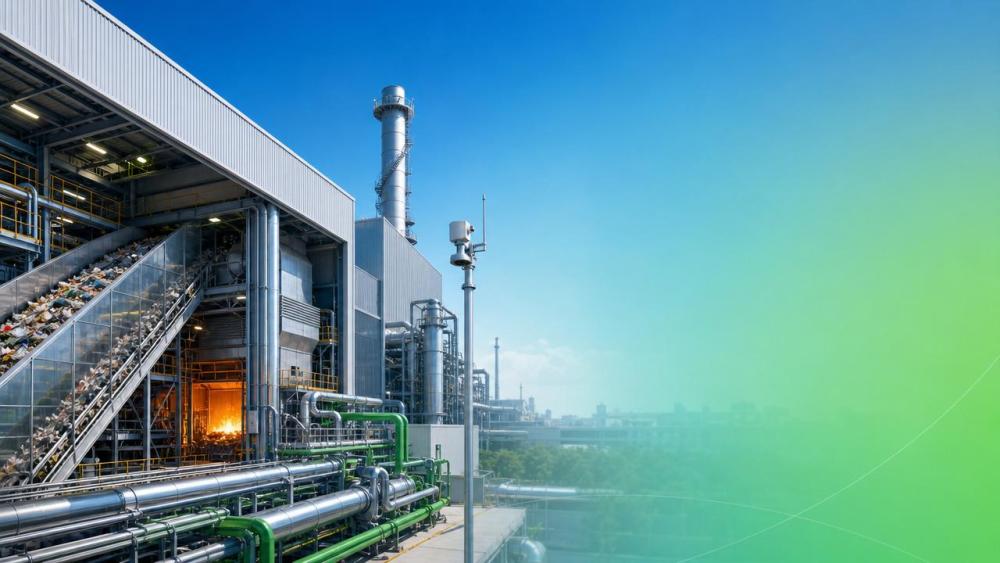
Many waste projects fail to scale because they begin as technology demonstrations rather than integrated infrastructure programs with defined operating responsibilities.
A pilot incinerator, digestion unit, sorting line, or sludge dryer may perform well under controlled conditions and still struggle at city scale.
Scalable Sustainable Waste Management requires the full chain to work, including collection, preprocessing, treatment, energy recovery, emissions control, residue handling, and reporting.
Project managers should therefore evaluate the weakest link, not only the headline treatment technology or vendor performance guarantees.
If feedstock quality varies daily, a technically advanced plant can still suffer downtime, corrosion, odor events, or unstable combustion efficiency.
The scalable model is one where front-end logistics, plant design, digital monitoring, and downstream markets are planned together from the beginning.
This is why mature projects treat waste as an engineered resource stream, not as an unpredictable burden arriving at the gate.
What Project Managers Usually Need To Know First
Project managers are usually not searching for slogans about sustainability; they need to know whether a solution can survive delivery reality.
The first concern is technical reliability, especially when waste composition changes across seasons, districts, industries, and regulatory categories.
The second concern is cost certainty, because capital expenditure is only one part of the long-term project exposure.
Energy use, reagent consumption, membrane replacement, residue disposal, ash treatment, labor, maintenance, and monitoring systems shape true lifecycle economics.
The third concern is compliance risk, since one emissions exceedance or leachate incident can damage permits, public trust, and project revenue.
The fourth concern is bankability, particularly for PPP, BOT, concession, or municipal procurement models requiring predictable cash flows.
A scalable solution must therefore answer four questions: will it work, can it pay back, will regulators accept it, and can teams operate it?
Engineering Standardization Makes Replication Possible
Scalability improves when engineering teams standardize core modules while allowing controlled adaptation for local feedstock and legal requirements.
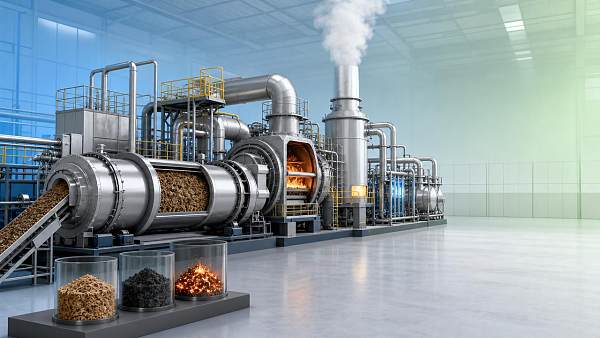
For example, waste-to-energy facilities can standardize combustion lines, boiler islands, flue gas treatment trains, and CEMS architecture.
Local customization may still be needed for calorific value, moisture content, medical waste ratios, ash chemistry, and grid interconnection rules.
The same principle applies to sludge dewatering, where standardized filter presses or dryers require site-specific cake dryness targets.
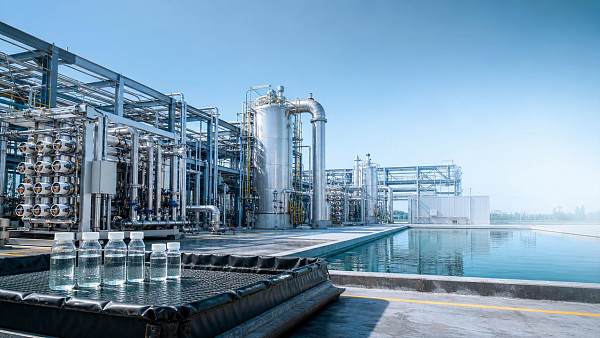
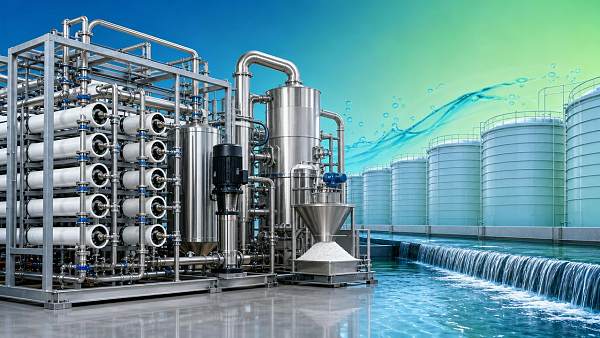
In industrial water and ZLD systems, modular pretreatment, reverse osmosis, evaporators, and crystallizers help replicate successful designs.
However, scaling a ZLD plant without understanding silica, hardness, organics, and boiling point elevation can produce expensive failures.
Project managers should ask vendors which components are standardized, which assumptions are site-specific, and which risks require pilot validation.
The goal is not rigid duplication, but repeatable engineering governance supported by lessons learned across multiple installations.
Lifecycle Economics Decide Whether A Project Can Grow
Sustainable Waste Management becomes scalable only when the business case remains credible after operating costs are fully exposed.
A low initial equipment price can become expensive if it causes high downtime, excess chemical consumption, or frequent component replacement.
For waste-to-energy plants, revenue may come from tipping fees, electricity sales, heat supply, renewable certificates, or capacity payments.
For sludge projects, value often comes from transport savings, landfill avoidance, lower incineration volume, and improved compliance resilience.
For resource recovery systems, payback depends on the purity, consistency, and marketability of recovered salts, metals, water, or energy.
Project managers should build financial models around realistic utilization rates, not optimistic nameplate capacity assumptions provided during bidding.
They should also stress-test scenarios involving feedstock shortage, higher disposal fees, electricity price volatility, and stricter emissions standards.
A project is scalable when its economics remain acceptable under imperfect operating conditions, not only under the best-case design scenario.
Regulatory Certainty Is A Scalability Multiplier
Environmental infrastructure scales faster when regulations are clear, enforceable, and aligned with long-term investment horizons.
Uncertain permitting creates delays, redesign costs, financing hesitation, and community opposition, even when the technical solution is sound.
Waste-to-energy projects require confidence around dioxin limits, NOx control, acid gas removal, fly ash classification, and continuous monitoring rules.
Industrial wastewater and ZLD projects require clarity on discharge bans, water reuse standards, brine disposal, and hazardous crystallized solids.
Carbon regulations are also becoming central, especially where emissions trading, CBAM exposure, or corporate ESG reporting affects procurement decisions.
For project managers, compliance should be designed into the baseline rather than added as a late-stage mitigation package.
This means specifying CEMS, data integrity protocols, calibration routines, and audit-ready reporting interfaces during project development.
Scalable projects reduce regulatory uncertainty by producing transparent evidence of performance, not by relying on manual records or delayed reports.
Real-Time Data Turns Operations Into A Repeatable Model
Digital monitoring is no longer an optional enhancement; it is a condition for scaling complex environmental assets responsibly.
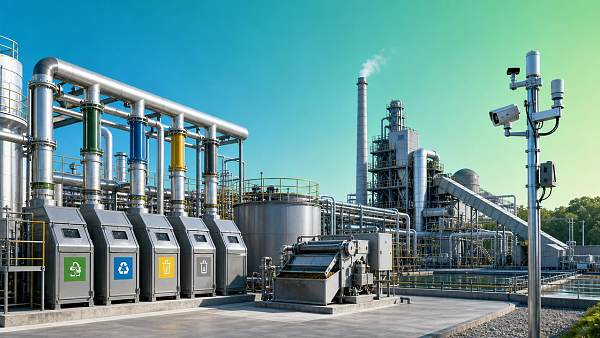
Continuous Emission Monitoring Systems provide second-level visibility into SO2, NOx, particulates, oxygen, flow, temperature, and compliance performance.
In water systems, sensors track conductivity, pressure, fouling behavior, recovery rates, chemical dosing, and membrane integrity.
For sludge lines, data on moisture, cake thickness, pressure cycles, thermal energy use, and dryer stability supports predictable performance.
When this data is integrated into dashboards, project teams can compare sites, detect abnormal trends, and standardize corrective actions.
This is especially valuable for operators managing portfolios across multiple cities, industrial parks, or concession territories.
Digital twins and predictive maintenance models can reduce downtime, but only when data quality, instrumentation discipline, and staff workflows are mature.
The scalable advantage comes from turning operational learning into replicable playbooks rather than isolated troubleshooting experience.
Feedstock Control Is Often The Hidden Scaling Constraint
Waste infrastructure is only as scalable as the quality and predictability of the waste stream entering the system.
Municipal solid waste varies by income level, climate, sorting behavior, food content, packaging trends, and informal recycling activity.
Industrial waste streams vary by production schedules, raw materials, cleaning cycles, and changes in manufacturing recipes.
If a project ignores these variations, equipment sizing, combustion balance, leachate treatment, and residue management can all become unstable.
Project managers should secure feedstock data before final design, including seasonal composition, moisture, calorific value, contaminants, and hazardous fractions.
They should also evaluate whether upstream sorting, blending, drying, or equalization tanks are needed to protect downstream processes.
In many cases, better preprocessing delivers more scalability than simply buying larger treatment equipment.
A disciplined feedstock strategy reduces technical risk, improves energy output, and strengthens lender confidence in long-term project performance.
Public Acceptance And Stakeholder Trust Cannot Be Treated As Soft Issues
Even well-designed Sustainable Waste Management projects can fail when communities do not trust the operator, regulator, or technology.
Concerns about odor, truck traffic, dioxins, ash disposal, water contamination, and property values can delay projects for years.
Scalable programs therefore build communication into the delivery model, not as a public relations activity after opposition emerges.
Real-time emissions displays, third-party audits, open facility visits, and transparent incident reporting can reduce suspicion and misinformation.
For project managers, stakeholder engagement should be tied to construction milestones, commissioning tests, and operational performance indicators.
This helps convert sustainability claims into visible accountability, especially for waste-to-energy and hazardous waste infrastructure.
Public acceptance grows when communities can see how risks are controlled, monitored, and independently verified.
Without this trust, even technically bankable projects may lose schedule certainty and political support.
Choosing The Right Technology For The Right Scaling Path
There is no single technology that makes Sustainable Waste Management scalable across every context and waste category.
Waste-to-energy is effective where landfill space is limited, calorific value is sufficient, and emissions governance is mature.
Anaerobic digestion can suit source-separated organic waste, wastewater sludge, and agricultural residues with stable biological characteristics.
Advanced sorting and material recovery work best where collection systems preserve recyclable quality and markets can absorb recovered materials.
ZLD and resource recovery systems are appropriate when discharge limits, water scarcity, or valuable constituents justify higher energy intensity.
Mechanical sludge dewatering and low-temperature drying are valuable when transport distance, landfill restrictions, or incineration costs are significant.
Project managers should avoid technology-led procurement and instead define performance outcomes, risk allocation, and lifecycle cost boundaries first.
The right scaling path is the one that fits local waste characteristics, compliance pressure, finance structure, and operational capability.
Procurement And Contract Design Shape Long-Term Performance
Scalability depends heavily on how procurement documents define responsibility, acceptance testing, guarantees, penalties, and data transparency.
Weak contracts may reward low capital cost while transferring hidden operational risk to the owner or municipality.
Strong contracts define throughput ranges, availability targets, emissions limits, energy efficiency, residue quality, and maintenance response obligations.
They also clarify who bears risk for feedstock composition, utility price changes, regulatory tightening, and force majeure events.
In PPP or BOT models, payment mechanisms should encourage stable operation rather than only construction completion or nominal capacity delivery.
Performance-based contracts can improve scalability when metrics are measurable, fair, and supported by reliable instrumentation.
Project managers should also require operator training, spare parts strategy, documentation, and knowledge transfer before final acceptance.
A scalable procurement model creates repeatable discipline across projects, reducing disputes and improving investor confidence.
How To Evaluate Whether A Solution Is Truly Scalable
A practical evaluation should begin with evidence from comparable operating references, not only vendor brochures or laboratory results.
Project teams should visit reference plants, review downtime records, inspect residue management, and speak with operators privately.
They should request performance data across seasons, including periods of abnormal feedstock, maintenance shutdowns, and regulatory inspections.
Financial evaluation should include total cost of ownership, sensitivity analysis, replacement cycles, and realistic revenue assumptions.
Compliance evaluation should examine permit pathways, monitoring requirements, audit readiness, and potential future tightening of standards.
Organizational evaluation should ask whether local staff can operate the system safely after vendor support decreases.
A scalable solution is not merely technically impressive; it is operationally teachable, financially durable, and legally defensible.
This evaluation discipline helps project managers separate infrastructure-ready models from promising technologies still requiring controlled demonstration.
Conclusion: Scalability Is Built Through Discipline
Sustainable Waste Management scales when engineering, economics, regulation, data, and stakeholder trust reinforce each other across the whole project lifecycle.
For project managers, the key is to move beyond isolated equipment decisions and manage waste systems as integrated infrastructure portfolios.
The strongest projects standardize what can be repeated, customize what local conditions demand, and measure what regulators and investors require.
They control feedstock risk, design for lifecycle cost, embed compliance monitoring, and create transparent evidence of environmental performance.
When these conditions are present, sustainable waste solutions can move from pilots to bankable assets serving cities, industries, and ESG commitments.
Scalability is therefore not a future promise; it is the result of disciplined project choices made from concept design through long-term operation.