



Search
Related News
- 00
0000-00
Thermal Sludge Treatment Options: Drying, Pyrolysis, and Incineration Compared - 00
0000-00
Environmental Engineering for ZLD Projects: Site Data, Permits, and Design Risks - 00
0000-00
Zero Waste Water vs ZLD: Process Choices for Industrial Effluent Reuse - 00
0000-00
Sustainable Waste Management Strategies for Plants With Mixed Waste Streams - 00
0000-00
High Temperature Incineration: Temperature, Residence Time, and Emission Limits
Can Environmental Monitoring Systems Cut Compliance Risk?




For quality control and safety managers, compliance risk often begins with data gaps—missed emissions spikes, delayed alarms, or inconsistent reporting.
Environmental Monitoring Systems help close those gaps by continuously tracking pollutants, wastewater parameters, and carbon-related indicators with defensible, audit-ready evidence.
In an era of stricter ESG mandates, CEMS requirements, and cross-border carbon rules, monitoring architecture has become a frontline safeguard.
Environmental Monitoring Systems Are Moving From Optional Control To Compliance Infrastructure
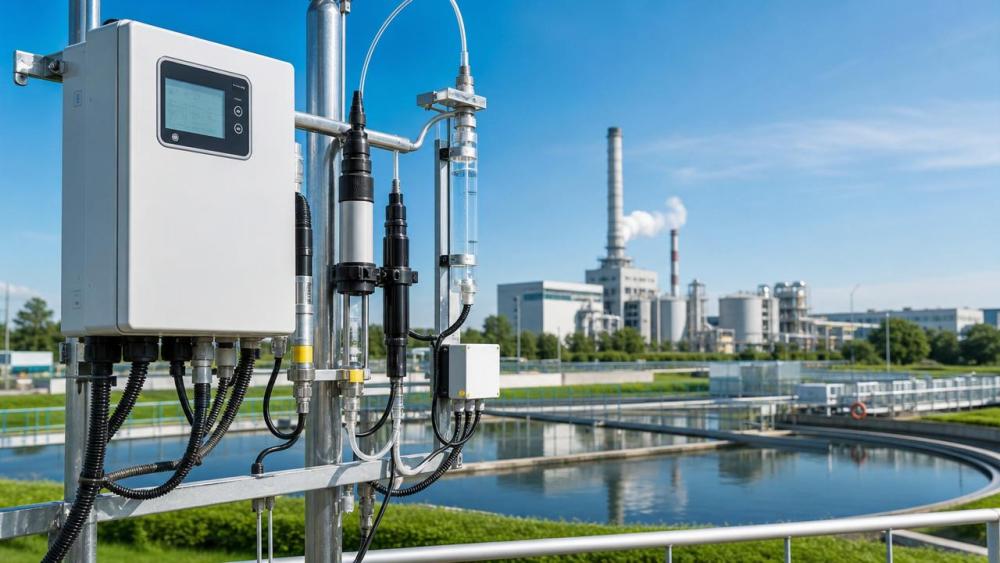
Across heavy industry, utilities, desalination, waste-to-energy, and advanced manufacturing, environmental compliance is becoming more measurable and less negotiable.
Regulators increasingly expect continuous evidence, not occasional sampling reports. This shift changes how plants view Environmental Monitoring Systems.
The old model treated monitoring as a reporting accessory. The new model treats Environmental Monitoring Systems as operational risk infrastructure.
For ZLD plants, CEMS stacks, sludge drying lines, and WTE furnaces, real-time environmental data now influences production stability.
A missed pH excursion, NOx peak, TOC anomaly, or carbon data gap can create regulatory exposure within minutes.
The Background Signal: Compliance Is Becoming Continuous, Digital, And Cross-Border
Environmental rules are converging around traceability. Permit conditions, ESG disclosure, and carbon border mechanisms all demand stronger measurement discipline.
Environmental Monitoring Systems are therefore expanding beyond basic alarms. They now support carbon accounting, audit trails, and automated regulatory submissions.
This trend is visible in continuous emission monitoring, wastewater compliance platforms, ambient air networks, and digital water treatment systems.
For export-oriented industries, environmental data increasingly affects market access. A weak monitoring record can become a commercial risk.
Environmental Monitoring Systems also support internal governance. They reveal whether treatment assets perform as designed under real operating loads.
What Is Pushing The Trend Forward?
Several forces are pushing Environmental Monitoring Systems from plant-level tools into strategic compliance platforms.
These forces make isolated instruments insufficient. Environmental Monitoring Systems must integrate sensors, validation logic, data historians, and governance controls.
Where Compliance Risk Usually Enters The System
Compliance failures rarely begin with one dramatic incident. They often emerge from small weaknesses in environmental data quality.
Environmental Monitoring Systems reduce risk when they detect those weaknesses early and preserve the evidence needed for investigation.
- Sensor drift that slowly distorts SO2, NOx, pH, conductivity, or turbidity readings.
- Manual sampling delays that miss short pollution peaks or unstable discharge conditions.
- Disconnected spreadsheets that create inconsistent ESG and permit reports.
- Unclear alarm ownership during night shifts, maintenance events, or production surges.
- Unverified carbon factors that weaken product-level emissions declarations.
Well-designed Environmental Monitoring Systems convert these weak points into controlled processes with timestamps, thresholds, escalation paths, and retained records.
Impact Across Water, Waste, Energy, And Carbon Operations
In industrial water treatment, Environmental Monitoring Systems track COD, ammonia, pH, ORP, salinity, flow, and heavy-metal indicators.
For ZLD facilities, monitoring also verifies concentration stages, crystallizer stability, condensate quality, and brine management performance.
In waste-to-energy plants, CEMS platforms monitor flue gas behavior after combustion, scrubbing, denitrification, filtration, and activated carbon injection.
Those Environmental Monitoring Systems help prove that dioxin control, acid gas removal, particulate capture, and NOx reduction remain within limits.
For desalination plants, monitoring supports intake protection, membrane performance, brine discharge control, and energy efficiency verification.
For carbon programs, Environmental Monitoring Systems create the data foundation behind Scope 1 emissions, fuel use, stack flow, and reduction claims.
The Business Impact Is Wider Than Permit Protection
Reliable environmental data improves insurance discussions, lender confidence, public communication, and long-term asset valuation.
Environmental Monitoring Systems also improve maintenance planning by showing when scrubbers, membranes, pumps, filters, or analyzers begin losing efficiency.
This creates a link between compliance protection and operating cost reduction. The strongest programs use both benefits together.
Key Capabilities That Now Define A Strong Monitoring Architecture
Not every monitoring upgrade reduces compliance risk. Environmental Monitoring Systems need technical, procedural, and governance strength.
- Continuous measurement: Critical parameters require near real-time visibility, especially at discharge points and emission stacks.
- Data validation: Systems should flag drift, missing values, calibration failures, and abnormal signal behavior.
- Audit readiness: Records must include timestamps, user actions, maintenance events, and change history.
- Alarm hierarchy: Alerts should distinguish early warning, permit risk, safety risk, and shutdown conditions.
- Integration: Environmental Monitoring Systems should connect with SCADA, DCS, laboratory systems, and ESG reporting tools.
- Cybersecurity: Environmental data must be protected from unauthorized changes, loss, or manipulation.
The most mature Environmental Monitoring Systems treat data integrity as seriously as measurement accuracy.
This is especially important when environmental records influence enforcement, carbon tariffs, green finance, or public disclosure.
How To Judge Whether Monitoring Can Cut Compliance Risk
The central question is not whether Environmental Monitoring Systems collect data. The question is whether they change decisions before violations occur.
A practical assessment should compare current risk exposure with response speed, data reliability, and evidence quality.
If Environmental Monitoring Systems only record problems after they happen, their compliance value remains limited.
If they trigger timely action, support root-cause analysis, and prove corrective control, compliance risk falls sharply.
Priority Focus Areas For The Next Upgrade Cycle
The next generation of Environmental Monitoring Systems will be judged by resilience, intelligence, and reporting usability.
- Map compliance-critical points. Identify stacks, outlets, bypass lines, brine streams, and carbon-intensive units.
- Define parameter priority. Separate legal limits from process indicators and early-warning variables.
- Strengthen calibration discipline. Analyzer reliability depends on scheduled checks, reference gases, standards, and maintenance logs.
- Link monitoring with control. Environmental Monitoring Systems should inform dosing, ventilation, combustion, membrane cleaning, and shutdown logic.
- Unify reporting layers. Permit reports, ESG dashboards, and carbon disclosures should use consistent source data.
- Prepare for external verification. Evidence packages should be easy to explain, export, and defend.
These priorities help avoid fragmented spending. They also make Environmental Monitoring Systems easier to scale across multiple sites.
A Practical Response Roadmap For Lower Compliance Exposure
A phased approach works better than a broad technology replacement. Environmental Monitoring Systems should evolve around risk, not fashion.
This roadmap is relevant for CEMS networks, wastewater monitoring stations, desalination facilities, WTE lines, and resource recovery assets.
It also supports digital twins, where Environmental Monitoring Systems provide the live environmental boundary conditions for simulation.
So, Can Environmental Monitoring Systems Cut Compliance Risk?
Yes, when they are designed as decision systems rather than passive measurement tools.
Environmental Monitoring Systems cut compliance risk by detecting anomalies earlier, proving control, and reducing uncertainty during regulatory review.
They also create a stronger bridge between plant operations, ESG disclosure, carbon accounting, and long-term environmental credibility.
The practical next step is to audit current monitoring gaps against permit limits, carbon obligations, and high-risk process points.
From there, Environmental Monitoring Systems can become a measurable safeguard for cleaner water, safer skies, and more resilient industrial growth.
Recommended News
 Thermal Sludge Treatment Options: Drying, Pyrolysis, and Incineration ComparedJun 03, 2026Thermal Sludge Treatment compared: discover how drying, pyrolysis, and incineration impact cost, emissions, energy recovery, and smarter sludge decisions.
 Environmental Engineering for ZLD Projects: Site Data, Permits, and Design RisksJun 03, 2026Environmental Engineering for ZLD projects: learn how site data, permits, brine chemistry, and design risks shape compliant, reliable, cost-effective water recovery.
 Zero Waste Water vs ZLD: Process Choices for Industrial Effluent ReuseJun 03, 2026Zero Waste Water or ZLD? Compare process routes, energy, brine handling, compliance risks, and reuse strategies to choose the right industrial effluent solution.
 Sustainable Waste Management Strategies for Plants With Mixed Waste StreamsJun 03, 2026Sustainable Waste Management strategies for mixed waste plants—cut disposal risk, improve ESG readiness, recover resources, and build a smarter circular operating model.