



Search
Related News
- 00
0000-00
Thermal Sludge Treatment Options: Drying, Pyrolysis, and Incineration Compared - 00
0000-00
Environmental Engineering for ZLD Projects: Site Data, Permits, and Design Risks - 00
0000-00
Zero Waste Water vs ZLD: Process Choices for Industrial Effluent Reuse - 00
0000-00
Sustainable Waste Management Strategies for Plants With Mixed Waste Streams - 00
0000-00
High Temperature Incineration: Temperature, Residence Time, and Emission Limits
What to check before buying Emission Control Systems




Before buying Emission Control Systems, the most important step is aligning technical performance with compliance, process conditions, and long-term operating economics.
A low upfront quote may hide weak monitoring, unstable removal efficiency, difficult maintenance, or future upgrade costs under tighter emissions rules.
Across industrial water, waste-to-energy, desalination, sludge handling, and carbon monitoring, system selection now affects ESG reporting, permit security, and asset resilience.
For organizations tracking environmental infrastructure through EWRS, Emission Control Systems are no longer auxiliary devices. They are operational safeguards and strategic compliance assets.
Understanding what Emission Control Systems include
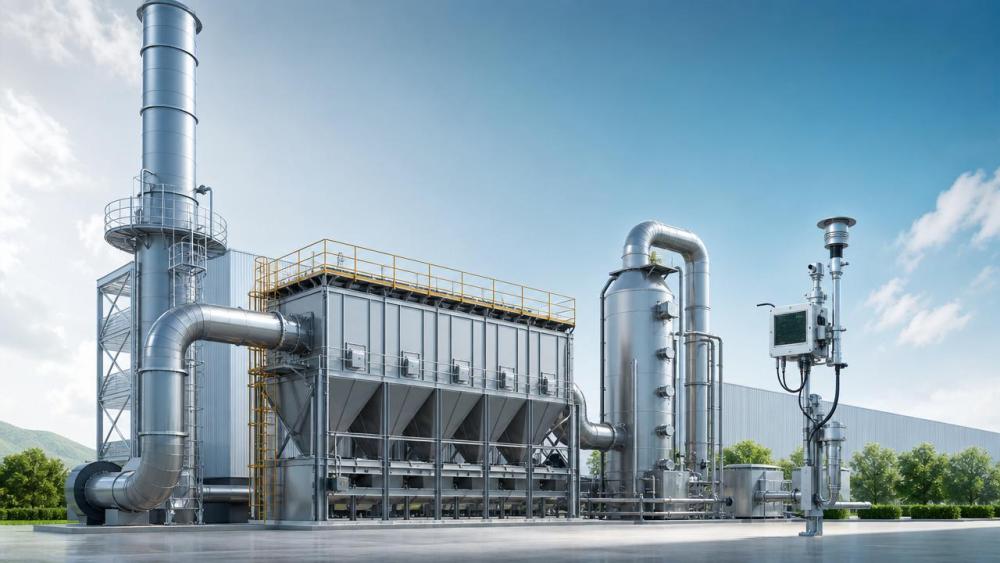
Emission Control Systems are integrated technologies that reduce, capture, monitor, or verify pollutants released from industrial processes and combustion sources.
They often combine treatment hardware, sensors, analyzers, control logic, data transmission, and reporting tools within one compliance framework.
Typical pollutants include particulate matter, SO2, NOx, VOCs, acid gases, heavy metals, dioxins, and greenhouse gases.
In many facilities, Emission Control Systems also connect with CEMS, carbon accounting, and environmental cloud platforms.
Common technology blocks
- Bag filters and electrostatic precipitators for dust removal
- SCR and SNCR for NOx reduction
- Wet, dry, or semi-dry scrubbers for acid gas control
- Activated carbon systems for dioxins, mercury, and trace organics
- CEMS for continuous emissions verification and reporting
Why Emission Control Systems selection matters now
Industrial regulation is becoming more dynamic, data-based, and cross-border. That changes how Emission Control Systems should be evaluated.
Facilities are not only judged on stack concentration limits. They are increasingly assessed on uptime, traceability, carbon intensity, and abnormal event response.
This trend is especially relevant in sectors monitored by EWRS, where water, energy, waste, and air compliance are tightly linked.
Key market signals influencing decisions
What to check before buying Emission Control Systems
The best buying decisions come from comparing technical fit, data reliability, and lifecycle practicality, not just equipment nameplate performance.
1. Compliance fit and regulatory scope
Confirm which pollutants must be controlled, monitored, and reported under local permits, sector rules, and export-related ESG requirements.
Check whether the Emission Control Systems design meets current limits and also leaves margin for foreseeable tightening.
2. Process compatibility
Flue gas temperature, moisture, dust load, corrosive species, oxygen content, and flow swings determine whether a system will remain stable.
A system that performs well in standard conditions may fail under high salt, sticky ash, medical waste variability, or marine humidity.
3. Monitoring accuracy and data integrity
Modern Emission Control Systems should support reliable sensing, calibration routines, redundancy options, and secure data retention.
Review analyzer accuracy, drift control, maintenance intervals, and compatibility with CEMS or plant historians.
4. Removal efficiency under real operating ranges
Ask for performance evidence at minimum, normal, and peak loads, not only ideal design points.
Real-world Emission Control Systems should tolerate startup, shutdown, feed changes, and transient upset conditions.
5. Lifecycle cost
Compare energy consumption, pressure loss, reagent demand, spare parts, calibration gases, labor, and disposal costs.
An apparently cheaper option may create higher annual cost through fan power, catalyst replacement, scrubber chemistry, or downtime.
6. Reliability and maintainability
Review mean time between failures, access for cleaning, availability of consumables, and service response commitments.
In harsh environments, maintainability often matters as much as capture efficiency.
7. Integration with plant systems
Check interfaces with DCS, PLC, SCADA, alarm logic, environmental reporting tools, and remote diagnostics.
Better integration improves response speed, operator visibility, and audit readiness.
8. Supplier capability
Evaluate engineering depth, reference sites, commissioning support, training quality, and spare parts continuity.
Strong Emission Control Systems suppliers can explain chemistry, controls, and failure modes clearly, not only provide brochures.
Application value across environmental infrastructure
The value of Emission Control Systems goes beyond legal compliance. They can improve thermal performance, community acceptance, and financing confidence.
For environmental assets with long concession lives, robust emissions control also protects reputation and contract stability.
Business significance in EWRS-related fields
- Waste-to-energy plants need stable acid gas, NOx, dust, and dioxin control
- Sludge drying and incineration lines require odor and particulate management
- Desalination support utilities may need emissions control for backup power and boilers
- Industrial water treatment plants benefit from integrated monitoring at thermal recovery units
- Carbon monitoring programs depend on defensible emissions measurement architecture
Typical scenarios and suitable evaluation focus
Practical review points before final selection
A structured checklist reduces the chance of choosing Emission Control Systems that look compliant on paper but underperform in operation.
Recommended due diligence steps
- Map pollutants, legal limits, and reporting requirements by site and process line
- Verify design basis against actual gas composition and operating variability
- Request guaranteed performance with defined boundary conditions
- Review maintenance access, shutdown needs, and spare parts lead times
- Compare total cost of ownership over five to ten years
- Inspect reference installations with similar waste, fuel, or throughput profiles
- Confirm cyber and data compliance for connected monitoring functions
Common mistakes to avoid
- Choosing only by capital expenditure
- Ignoring abnormal operating modes
- Underestimating calibration and verification needs
- Assuming one reference site represents all process conditions
- Separating emissions control from broader ESG and carbon strategy
Next-step framework for informed decisions
The best approach is to treat Emission Control Systems as a long-life environmental platform rather than a single purchase item.
Start with a site-specific emissions profile, then compare compliance margin, monitoring architecture, operating cost, and supplier execution strength.
For projects involving ZLD, WTE, desalination, sludge treatment, or carbon monitoring, integrated technical intelligence helps prevent expensive compliance gaps.
EWRS supports this perspective by connecting emissions technology choices with operational stability, ESG accountability, and long-term resource recovery value.
Recommended News
 Thermal Sludge Treatment Options: Drying, Pyrolysis, and Incineration ComparedJun 03, 2026Thermal Sludge Treatment compared: discover how drying, pyrolysis, and incineration impact cost, emissions, energy recovery, and smarter sludge decisions.
 Environmental Engineering for ZLD Projects: Site Data, Permits, and Design RisksJun 03, 2026Environmental Engineering for ZLD projects: learn how site data, permits, brine chemistry, and design risks shape compliant, reliable, cost-effective water recovery.
 Zero Waste Water vs ZLD: Process Choices for Industrial Effluent ReuseJun 03, 2026Zero Waste Water or ZLD? Compare process routes, energy, brine handling, compliance risks, and reuse strategies to choose the right industrial effluent solution.
 Sustainable Waste Management Strategies for Plants With Mixed Waste StreamsJun 03, 2026Sustainable Waste Management strategies for mixed waste plants—cut disposal risk, improve ESG readiness, recover resources, and build a smarter circular operating model.