



Search
Related News
- 00
0000-00
Thermal Sludge Treatment Options: Drying, Pyrolysis, and Incineration Compared - 00
0000-00
Environmental Engineering for ZLD Projects: Site Data, Permits, and Design Risks - 00
0000-00
Zero Waste Water vs ZLD: Process Choices for Industrial Effluent Reuse - 00
0000-00
Sustainable Waste Management Strategies for Plants With Mixed Waste Streams - 00
0000-00
High Temperature Incineration: Temperature, Residence Time, and Emission Limits
How accurate are environmental monitoring systems today?




How accurate are Environmental Monitoring Systems today? For quality control and safety managers, the answer directly affects compliance, risk prevention, and operational reliability. From emissions tracking to water quality surveillance, modern systems deliver faster data, smarter diagnostics, and tighter process visibility—yet their real accuracy depends on calibration, sensor quality, and application environment. Understanding these factors is essential for making confident environmental decisions.
What accuracy can Environmental Monitoring Systems realistically deliver?
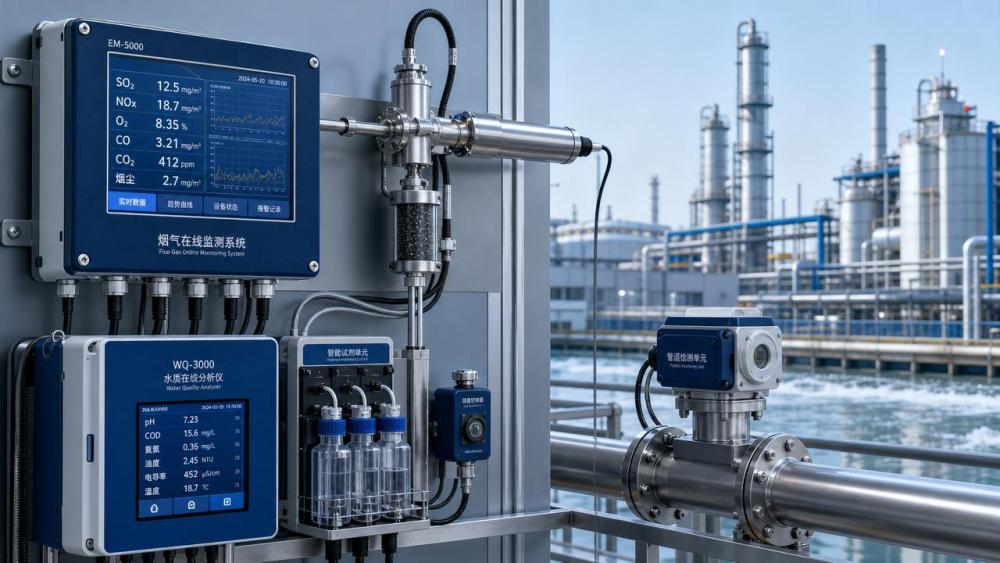
Environmental Monitoring Systems are far more capable today than they were a decade ago, but accuracy is not a single fixed number. It varies by pollutant, sensor type, sampling method, environmental conditions, and maintenance discipline. For quality control teams and safety managers, the practical question is not whether a system is “accurate,” but whether it is accurate enough for the compliance threshold, process control target, and risk profile of the facility.
In industrial water treatment, waste-to-energy, desalination, sludge handling, and CEMS applications, modern Environmental Monitoring Systems can achieve strong repeatability and reliable trend detection when properly selected and maintained. However, precision in a laboratory does not automatically translate into field accuracy beside a stack, near a brine line, or inside a humid, corrosive utility room.
Why this matters in daily operations
- A false high reading may trigger unnecessary shutdowns, chemical dosing changes, or emergency escalation.
- A false low reading can hide emission exceedances, water contamination events, or unsafe workplace exposure.
- Poor data traceability weakens audits, incident investigations, and ESG reporting credibility.
EWRS closely follows these realities across high-demand environmental infrastructure. In sectors such as ZLD, WTE incineration, SWRO desalination, sludge dewatering, and carbon monitoring, the value of monitoring accuracy is tied directly to permit compliance, equipment protection, operating cost, and public accountability.
Which factors most affect Environmental Monitoring Systems accuracy?
Accuracy depends on more than the sensor data sheet. A procurement decision based only on nominal range or vendor claims often creates long-term reliability problems. Quality control and EHS teams should evaluate the full measurement chain, from sampling and signal conditioning to calibration routines and data transmission.
Core accuracy drivers
- Sensor principle: electrochemical, NDIR, UV, laser, turbidity, conductivity, TOC, pH, and particulate methods perform differently under interference.
- Sampling integrity: heated lines, filtration, moisture control, and representative extraction are critical in CEMS and process gas measurement.
- Calibration quality: zero and span drift, reference gas quality, and calibration frequency directly influence field performance.
- Environmental stress: vibration, salt spray, high humidity, stack temperature fluctuation, and chemical corrosion can bias readings.
- Software and analytics: compensation algorithms, alarm logic, diagnostics, and timestamp synchronization affect data trustworthiness.
This is especially important in extreme duty applications. For example, a seawater desalination plant may face conductivity sensor fouling and chloride corrosion, while a waste-to-energy plant may struggle with particulate loading, acidic gases, and temperature swings. The same brand or method may perform well in one site and underperform in another.
The table below summarizes how different field variables influence Environmental Monitoring Systems accuracy across common industrial environmental scenarios.
For buyers, the key lesson is simple: the stated specification only describes potential performance under defined conditions. Real plant accuracy comes from system design, installation discipline, and maintenance planning.
How do different applications compare in real-world performance?
Environmental Monitoring Systems are used in very different ways across industrial settings. Some are compliance tools. Others are process optimization instruments. Some must survive harsh stack conditions, while others support fine control in ultrapure water systems. This changes what “accurate enough” means.
Application-specific expectations
In CEMS, accuracy must support defensible reporting for SO2, NOx, CO, O2, particulate matter, and increasingly carbon-related metrics. In ZLD and industrial water systems, online analyzers must catch conductivity shifts, pH excursions, silica leakage, or TOC spikes before they damage membranes, boilers, or product quality. In sludge and waste handling, monitoring may focus more on safe operating windows and trend reliability than ultra-fine analytical precision.
The following comparison helps quality and safety managers match performance expectations to site conditions.
This comparison shows why one universal purchasing checklist is not enough. A stack analyzer, a brine conductivity meter, and an UPW TOC monitor each face different stress conditions and deliver value in different ways.
What should buyers check before selecting Environmental Monitoring Systems?
Procurement errors usually happen when teams focus on capex alone. For quality control and safety managers, the more relevant decision is total measurement reliability over time. That includes installation suitability, audit readiness, maintenance burden, spare parts support, and integration with plant systems.
A practical selection checklist
- Define the monitoring objective clearly: compliance reporting, early warning, process optimization, or carbon accounting.
- Match the measurement range to actual operating windows, not only upset conditions.
- Review expected interferences such as humidity, salts, particulates, dissolved organics, and corrosive gases.
- Confirm calibration method, reference standards, and recommended service intervals.
- Check data output, historian compatibility, alarm management, and traceability requirements.
- Evaluate total operating cost, including consumables, cleaning, replacement sensors, and technician time.
EWRS brings added value here because environmental monitoring is rarely isolated. A carbon monitor may affect ESG disclosure. A conductivity excursion may indicate a membrane issue. A stack deviation may signal combustion instability or flue gas treatment inefficiency. Linking measurement data to wider process and compliance strategy is where many buyers gain the strongest return.
Selection priorities by decision role
Quality control teams usually prioritize trend stability, sensitivity, and traceability. Safety managers often focus on alarm dependability, incident prevention, and regulatory response time. Operations managers may care most about uptime and maintenance simplicity. A strong procurement process should align all three views before vendor comparison begins.
How can you improve accuracy after installation?
Even well-designed Environmental Monitoring Systems can lose performance when commissioning is rushed or maintenance becomes reactive. Accuracy is protected through disciplined lifecycle management, not one-time equipment purchase.
Post-installation actions that matter
- Establish a documented calibration schedule based on actual fouling rate, drift history, and regulatory expectations.
- Use routine zero and span verification to catch gradual deviation before data quality collapses.
- Track maintenance events against reading anomalies to identify recurring root causes.
- Confirm sensor placement and sample point design remain representative after process modifications.
- Train operators to distinguish between real process alarms and instrument health warnings.
Digital diagnostics are also improving. Many modern Environmental Monitoring Systems can flag drift, fouling, communication faults, or abnormal sensor response before failure occurs. For facilities pursuing digital twins or predictive maintenance, this turns monitoring from passive reporting into active operational protection.
Which standards and compliance points should be reviewed?
Accuracy discussions must also consider the compliance environment. Industrial sites may be subject to emissions permits, wastewater discharge limits, occupational safety expectations, corporate ESG reporting, and cross-border carbon disclosure requirements. The exact framework varies by country and industry, but the procurement logic is similar.
Common compliance checkpoints
- Does the monitoring method align with applicable local environmental reporting rules?
- Can the system support calibration records, audit logs, and data retention requirements?
- Is the analyzer suitable for continuous duty in the target environmental condition?
- Can the data be integrated into broader carbon, ESG, or plant compliance workflows?
In sectors followed by EWRS, this wider compliance view is increasingly important. Carbon data, discharge data, and emission data are no longer separate from financing, export competitiveness, and stakeholder trust. Monitoring accuracy now carries strategic weight beyond the plant fence line.
FAQ: What do quality and safety managers ask most often?
Are Environmental Monitoring Systems accurate enough for regulatory reporting?
They can be, provided the correct technology is selected and supported by proper calibration, validation, and maintenance. Regulatory suitability depends on the measured parameter, required reporting method, and whether the installation supports representative sampling and traceable records.
What is the biggest hidden cause of poor accuracy?
In many plants, the biggest hidden issue is not the sensor itself but the surrounding measurement chain. Sample line condensation, fouling, bad probe location, unstable power, and delayed maintenance often create larger errors than the analyzer specification suggests.
Should we prioritize laboratory-grade precision or field robustness?
For most industrial applications, field robustness matters more if the instrument must operate continuously in a harsh environment. A slightly lower theoretical precision is often more valuable than a fragile sensor that drifts quickly or requires frequent intervention.
How often should Environmental Monitoring Systems be recalibrated?
There is no universal interval. Recalibration depends on the monitored medium, contamination risk, stability history, permit conditions, and manufacturer guidance. Facilities with high dust, salt, humidity, or variable load usually need more frequent verification.
Why choose EWRS when evaluating monitoring accuracy and system strategy?
EWRS is positioned around the industrial realities where Environmental Monitoring Systems matter most: ZLD water treatment, ultrapure water systems, waste-to-energy incineration, seawater desalination, sludge dewatering, CEMS, and carbon monitoring. That cross-sector view helps buyers move beyond generic specifications and assess how monitoring accuracy connects to process reliability, ESG pressure, and lifecycle cost.
If your team is comparing monitoring options, EWRS can support structured evaluation around the issues that usually delay procurement or create post-installation regret.
- Parameter confirmation for gas, water, sludge, and carbon monitoring applications.
- Selection guidance based on duty conditions such as corrosive gas, high salinity, fouling risk, and continuous operation.
- Discussion of delivery timing, installation constraints, and maintenance workload.
- Review of compliance expectations, data traceability needs, and integration priorities.
- Support for custom solution comparison, budgeting logic, and quotation communication.
When environmental performance, process continuity, and reporting credibility all depend on measurement quality, selecting Environmental Monitoring Systems should never be reduced to price alone. A more disciplined assessment now can prevent compliance exposure, false alarms, and costly operational blind spots later.
Recommended News
 Thermal Sludge Treatment Options: Drying, Pyrolysis, and Incineration ComparedJun 03, 2026Thermal Sludge Treatment compared: discover how drying, pyrolysis, and incineration impact cost, emissions, energy recovery, and smarter sludge decisions.
 Environmental Engineering for ZLD Projects: Site Data, Permits, and Design RisksJun 03, 2026Environmental Engineering for ZLD projects: learn how site data, permits, brine chemistry, and design risks shape compliant, reliable, cost-effective water recovery.
 Zero Waste Water vs ZLD: Process Choices for Industrial Effluent ReuseJun 03, 2026Zero Waste Water or ZLD? Compare process routes, energy, brine handling, compliance risks, and reuse strategies to choose the right industrial effluent solution.
 Sustainable Waste Management Strategies for Plants With Mixed Waste StreamsJun 03, 2026Sustainable Waste Management strategies for mixed waste plants—cut disposal risk, improve ESG readiness, recover resources, and build a smarter circular operating model.